There's this wonderful moment in The Fellowship of the Ring, when Gandalf says to Frodo, "Keep it secret. Keep it safe."
This is the most astonishingly good advice.
Jesus followed the same path. There is what's called in the gospels "the messianic secret", because time and again when he heals somebody, Jesus cautions them to tell no one; to keep it secret. Likewise, when he teaches the people he always does so in parables. Only in his close, trusted circle does he unpack the wisdom of the story, speaking plainly. That way he offers the gift of spiritual truth, but safely wrapped up in a story, so that it is only recognisable to those who can be trusted to handle it advisedly.
Lao Tzu teaches the same principle in the Tao (see Ch.15 and Ch.56), observing that those who talk do not know and those who know do not talk, and that the ancient masters went cautiously and quietly.
Father Tom Cullinan, the monk who lived in the forest and was my friend, taught the same thing. He advised me never to speak about living simply, not to discuss it or promote it; keep it hidden, keep it secret, keep it safe.
The more I see of life, the more convinced I am becoming that this is 24 carat super-wisdom. It is as though the truth arises in an individual's life like a hidden spring welling up from the earth of their soul. You can recognise it, but you cannot impart it. You cannot give your truth to someone else, you can only live it.
Here and there, when someone has need of the truth you know, you may be able to speak to them quietly and privately; and those who journey with you, live with you, discover your truth. But broadcasting it only attracts opposition, antagonism and contention; the enemies of quietness and of peace.
Those who know truth have to learn to become die stille im Lande. It is the only way to proceed. If you try anything else, people will block you. The more you know, the more you have to withdraw. It's the only way through. Those who belong to the same path will find you.
It can be very frustrating. The secret burns inside you as Frodo's ring burned in his pocket, as truth burned in Jeremiah's bones wanting to come out. But truth is for living; the only way it can be told safely is in stories, as Jesus did. Unless you don't mind people throwing you into a well or cutting your head off or putting you in prison or stoning you. That was the price.
To learn truth, watch people's lives. It's like seeing a pattern unfolding as cloth is woven, or observing a melody developing. Then you know what they know — or what they don't. To teach truth, let people watch your life.
In recent times, three things have happened to remind me of this — a correspondence, a conversation, and an online discussion. These served as forceful reminders that people generally prefer to deal in externals. If you allow inner reality to appear, it causes affront and argument.
Ssh. Keep it secret. Keep it safe. If you know.
See also this blog post, and this, and this, and this.
Monday, 6 August 2018
Thursday, 12 July 2018
Made me happy
I may be simplistic in my personal walk, but I was all bogged down and tangled up in the complexities of humanity and church, and then this made me happy today. Made me smile. Made me dance.
Thursday, 5 July 2018
Why, thank you.
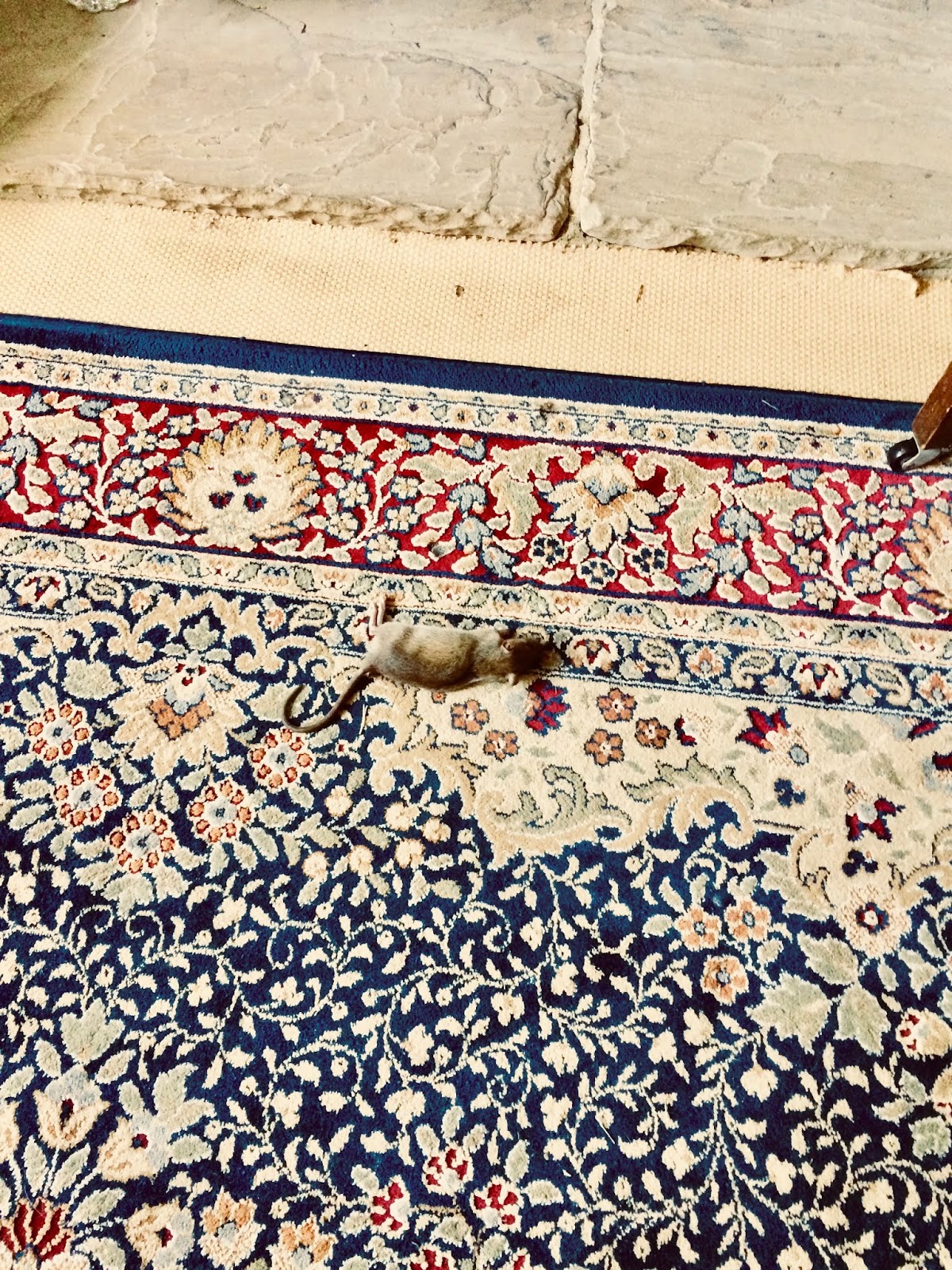
Our cats.
So thoughtful.
Such presentation.
Such pride.
Right there on the rug dead centre in front of the hearth stone, a splendid gift. O, the joy.
Worth a photograph, I thought. I used the Dramatic filter: it seemed appropriate, somehow.
So thoughtful.
Such presentation.
Such pride.
Right there on the rug dead centre in front of the hearth stone, a splendid gift. O, the joy.
Worth a photograph, I thought. I used the Dramatic filter: it seemed appropriate, somehow.
Saturday, 30 June 2018
Mapping your journey
Our home group has just started a new study course called "Going to Galway" (from the old Irish joke's punchline, "If I was going to Galway, I wouldn't start from here.")
It's a Christian basics course working with the assumption that things always go better if you start where you are rather than where you're trying to get to — if you begin with the reality rather than the aspiration, if you see what I mean.
So we began this week by imagining one of those large tourist maps with an arrow proclaiming YOU ARE HERE (how do they always know?!)
And we thought about our own lives and our personal spiritual journeys, our specific road less travelled.
I'd thought we might be ambitious enough to draw a map, but that can take ages and it seems a pity to use up our fellowship time in corporate silence, drawing. Besides, some people feel horror strike deep into their soul when you ask them to draw a picture.
So instead, I made a sort of graphic with boxes to fill in (writing is less alarming for most of us), as a focus for our thoughts and starter for our discussion.
As ever, I was fascinated and delighted by the different insights and variety of experience, the richness and texture of spirituality that unfurled in our conversation. We had a good time.
So I thought you might like to have a go. Here's the graphic.
You should be able to print it off in A4 successfully.
Let me know how you get on, and ask me if there's anything you don't understand.
It's a Christian basics course working with the assumption that things always go better if you start where you are rather than where you're trying to get to — if you begin with the reality rather than the aspiration, if you see what I mean.
So we began this week by imagining one of those large tourist maps with an arrow proclaiming YOU ARE HERE (how do they always know?!)
And we thought about our own lives and our personal spiritual journeys, our specific road less travelled.
I'd thought we might be ambitious enough to draw a map, but that can take ages and it seems a pity to use up our fellowship time in corporate silence, drawing. Besides, some people feel horror strike deep into their soul when you ask them to draw a picture.
So instead, I made a sort of graphic with boxes to fill in (writing is less alarming for most of us), as a focus for our thoughts and starter for our discussion.
As ever, I was fascinated and delighted by the different insights and variety of experience, the richness and texture of spirituality that unfurled in our conversation. We had a good time.
So I thought you might like to have a go. Here's the graphic.
You should be able to print it off in A4 successfully.
- Where I am now — how do life and faith feel to you at the present time? What fills your vision and determines your reality right now?
- My True North — where you're headed, your goal or destination.
- The hidden treasure I found — surprising sources of delight and enrichment you experience on the way.
- Who showed me the way? — Who inspired and taught you?
- Where I left an altar — those special moments of joy or grief, people you loved and lost and still remember, sacred instances like a birth, a marriage, a vocation . . .
- Big crossroads — the life-changing decisions or changes.
- What I lost on the way — and were you sad or glad about that?
- Where I thought I was going but wasn't — sometimes as our spirituality develops, the way we began no longer works, and something new develops.
- Where I got stuck — times I was puzzled or confused, despairing or defeated.
- Who went with me — my true companions on the journey; the ones who understood and shared my spiritual quest.
- The food I ate — what nourished and sustained me.
- The light I carried — what illumined my understanding and showed me the way; and for what or whom I carried a torch, bore a flame; what have I believed in? What keeps the darkness at bay for me?
- What got me started — a person? A book? An idea?
- All at sea — where I am still confused or perplexed. What is hard to understand? Where am I still lost or out of my depth?
Let me know how you get on, and ask me if there's anything you don't understand.
Thursday, 28 June 2018
Anti-Drama
I wish a television channel — or at least a programme — existed, in which almost nothing happened.
I love costume drama; but it's the costumes I love, not the drama. I look wistfully at the pictures of Poldark and wish I could face actually watching it. But the sadness, the adulteries, the intrigues, the betrayals — I hate them, and they are the stuff of the unfolding story.
I started watching The Crown and got on quite well with it at first, but gave up. I couldn't keep company with its descent into exploration of marital strife, school bullying, promiscuity, spitefulness and family rows.
No story seems complete without bitter arguments, people storming out, terrible revelations, suffering and tension. I can't cope with it.
I wish there could be a programme where elegant people in Edwardian clothing, living marvellous lives in country chateaux and superb town houses, had tea with each other and drove about in their beautiful cars. They could go to the opera and open imposing black umbrellas against the rain and travel on steam trains and enjoy picnics in idyllic countryside. We could see their lovely china and crystal and beautiful décor, their silk and linen and lace, their noble horses and their dogs and farm animals. Which is to say, we would see the farm animals doing their work, or being brushed or fed, but not lengthy close-ups of copulation and shit.
We could see them going to church, and singing the hymns in all four parts, with a sensible and intelligent clergyman who actually had something to say worth hearing, with a wise and kind face and the ability to speak thoughtfully without pontificating or making a fool of himself. Not all the clergy are idiots.
There could be problems — characters could get sick and die or do something they were ashamed of or make a mistake; but they would explain what had happened and it would be received with kindness. They would support one another in pain or distress, hear each other's trouble with understanding, and together work towards putting it right.
They could identify social evil and set about making things better. The wealthy landowning people could be kind and generous to their servants, and they could all behave with dignity and restraint, speaking courteously — even about people who weren't there.
The servants of the big houses could have their own cottages with gardens and chickens, and we could enjoy seeing the simplicity of their lives — the humble homes and the grand palaces, equally beautiful in different ways; the skills of working men and women and the responsibility of wise and trustworthy landowners, working together with mutual respect.
And the women wouldn't all have to be thin; they could be plump but still beautiful and interesting. And the children could be quiet and studious, and polite to their parents, not always bullying each other or flouncing about complaining.
The interest in it would come from seeing realistic problems constructively overcome — illnesses of humans, animals, plants; the challenges of development and change as industry alters the landscape and new skills are required; the domestic challenges of managing conflict well and communicating with people who aren't very bright. Everyday life has so much to think about and overcome: learning how to be a parent, the struggle of being shy or lonely, looking after bees and roses and new lambs, cooking complicated meals and planning banquets, training puppies and making friends with wild birds, the experience of growing old or of caring for a family member with a disability . . .
Why not? Is that unrealistic? Is it boring? I didn't think so. I think there have always been such people. Life isn't one great big slanging match of corruption and cruelty and people taking advantage of one another. Some people are good, and happy, and content. Life is difficult and funny and interesting all by itself.
I tell you what, I could watch it all day.
Picture: William McGregor Paxton, Tea Leaves, oil on canvas, 1909, Metropolitan Museum of Art — public domain
Thursday, 14 June 2018
Beyond words
Every now and then I like to go back to York to check in with my old friends — the Minster and Betty's Café, my places of pilgrimage.
York Minster gives me the oddest feeling. It is the friendliest building I've ever known. From the first time I set foot in it (forty two years ago) and still today, it has felt like a large animal that likes me. And I like it right back. It makes my heart glad.
Minster evensong is a variable experience, which has been travelling downhill for me along with a lot of other spiritual connections, during the last few years. But this week set it right again, and restored my joy. It was the turn of the girl choristers to sing, and they were spectacularly good. They also had a new (since I was last there) counter-tenor whose voice was just superb, absolutely inhabiting the note dead-centre. Simply beautiful. They sang a cappella the day I was there; soul food extraordinaire.
And I love the Book of Common Prayer. Objectively evaluated, my life has been sheltered and uneventful, but — believe me — it's had its storms and terrors. I have not lived with the horrors Thomas Cranmer knew, with his prison room overlooking the yard where his friends were burned alive, knowing his own end would be the same ghastly and cruel agony. No twists and turns made in fear could get him out of it, and his courage at the end was magnificent.
Even though my paths have been sunny and secure by comparison, nonetheless his prayers resonate with my soul like no one else's. When he begs of God that we may pass our time in rest and quietness, my "amen" is fervent. When he confesses that without God's help, "nothing is strong, nothing is holy," my spirit witnesses to it as truth indeed.
When the words of his prayer roll forth to start the Eucharist — "Almighty God, unto whom all hearts be open, all desires known, and from whom no secrets are hid: cleanse the thoughts of our hearts by the inspiration of thy Holy Spirit, that we may perfectly love thee, and worthily magnify thy holy name . . ." — it is exactly and completely what I want to say.
Same with the collects at Evening Prayer:
For peace: "O God, from whom all holy desires, all good counsels, and all just works do proceed; Give unto thy servants that peace which the world cannot give; that our hearts may be set to obey thy commandments, and also that by thee, we, being defended from the fear of our enemies, may pass our time in rest and quietness; through the merits of Jesus Christ our Saviour. Amen."
For help: "Lighten our darkness, we beseech thee, O Lord; and by thy great mercy defend us from all perils and dangers of this night; for the love of thy only Son, our Saviour, Jesus Christ. Amen."
And intercessions for all conditions of humankind: "O God, the Creator and Preserver of all mankind, we humbly beseech thee for all sorts and conditions of men; that thou wouldest be pleased to make thy ways known unto them, thy saving health unto all nations. Grant to all in authority wisdom and strength to know and to do thy will. Fill them with the love of truth and righteousness; and make them ever mindful of their calling to serve the people in thy fear."
"Yes," my heart says; "Yes." Makes a change from its habitual teeth-clenched mutterings of "No" that public worship so often draws forth.
So the visit to the Minster proved to be restoring of peace and hope.
And Betty's, in a different way, also feeds my soul — because of the excellence, the attention to detail, the kindness. Betty's is worth a visit. Worth coming to England for all by itself. In my lifetime, Betty's has survived three recessions completely unscathed, and if you've been there you'll understand why. Built on the rock, is Betty's. Integrity, wholesome goodness, cheerfulness, commitment to the highest standards.
On the way to York, passing through Kings Cross Station, I met this dinosaur (I am the one in front; the dinosaur is behind me).
I'm glad we got this photo, because a railway station is no place for wild animals and they had all legged it when we passed through on our way home the following day.
Then on the last weary stretch of the journey home, by which time I was very tired and uncomfortable, I overheard a conversation that arrested my attention entirely (cell phones have more obliterated than blurred the distinction between private and public, have they not!)
The woman in the seat behind me interrupted her conversation with a friend to take a call.
"Hello," said she, in a hard and somewhat impatient tone of voice: "What can I do for you?" An unwelcome business call, it seemed.
She listened a moment then reiterated, "So what can I do for you? Can you name a figure?"
She listened further. "But what figure do you have in mind?" She sounded cold and irritable now.
She then began to wind up the conversation in a manner that sounded as if she was overriding the person on the other end of the line, suggesting they get their facts in order and call her when they had a better handle on the situation.
The tenor of the call was reluctance verging on hostility.
But it was the way she ended it that jolted my attention:
"Love you. Bye."
What? "Love you"? Seriously?
And it started me thinking about words.
There are words, like the ones written down here, for which you have to supply your own tone of voice; and when you do that, you import and impose a level of meaning that may or may not be here.
It occurred to me that the words in the Bible are like that. When the Bible, with its insistence on love and kindness, is used to hurt and exclude, used as a weapon, used to make oneself right and others wrong, then faith becomes incongruous and its meaning ebbs away.
That woman on the train — her words said "I love you" but her tone of voice and the whole of the rest of her conversation said "No I don't."
I think she must have been talking to a close family member, and the love between them must have gradually fossilised into duty as time went by.
So much of my life has been about words; but of course words are absolutely nothing if that's all they are. If you see what I mean.
York Minster gives me the oddest feeling. It is the friendliest building I've ever known. From the first time I set foot in it (forty two years ago) and still today, it has felt like a large animal that likes me. And I like it right back. It makes my heart glad.
Minster evensong is a variable experience, which has been travelling downhill for me along with a lot of other spiritual connections, during the last few years. But this week set it right again, and restored my joy. It was the turn of the girl choristers to sing, and they were spectacularly good. They also had a new (since I was last there) counter-tenor whose voice was just superb, absolutely inhabiting the note dead-centre. Simply beautiful. They sang a cappella the day I was there; soul food extraordinaire.
And I love the Book of Common Prayer. Objectively evaluated, my life has been sheltered and uneventful, but — believe me — it's had its storms and terrors. I have not lived with the horrors Thomas Cranmer knew, with his prison room overlooking the yard where his friends were burned alive, knowing his own end would be the same ghastly and cruel agony. No twists and turns made in fear could get him out of it, and his courage at the end was magnificent.
Even though my paths have been sunny and secure by comparison, nonetheless his prayers resonate with my soul like no one else's. When he begs of God that we may pass our time in rest and quietness, my "amen" is fervent. When he confesses that without God's help, "nothing is strong, nothing is holy," my spirit witnesses to it as truth indeed.
When the words of his prayer roll forth to start the Eucharist — "Almighty God, unto whom all hearts be open, all desires known, and from whom no secrets are hid: cleanse the thoughts of our hearts by the inspiration of thy Holy Spirit, that we may perfectly love thee, and worthily magnify thy holy name . . ." — it is exactly and completely what I want to say.
Same with the collects at Evening Prayer:
For peace: "O God, from whom all holy desires, all good counsels, and all just works do proceed; Give unto thy servants that peace which the world cannot give; that our hearts may be set to obey thy commandments, and also that by thee, we, being defended from the fear of our enemies, may pass our time in rest and quietness; through the merits of Jesus Christ our Saviour. Amen."
For help: "Lighten our darkness, we beseech thee, O Lord; and by thy great mercy defend us from all perils and dangers of this night; for the love of thy only Son, our Saviour, Jesus Christ. Amen."
And intercessions for all conditions of humankind: "O God, the Creator and Preserver of all mankind, we humbly beseech thee for all sorts and conditions of men; that thou wouldest be pleased to make thy ways known unto them, thy saving health unto all nations. Grant to all in authority wisdom and strength to know and to do thy will. Fill them with the love of truth and righteousness; and make them ever mindful of their calling to serve the people in thy fear."
"Yes," my heart says; "Yes." Makes a change from its habitual teeth-clenched mutterings of "No" that public worship so often draws forth.
So the visit to the Minster proved to be restoring of peace and hope.
And Betty's, in a different way, also feeds my soul — because of the excellence, the attention to detail, the kindness. Betty's is worth a visit. Worth coming to England for all by itself. In my lifetime, Betty's has survived three recessions completely unscathed, and if you've been there you'll understand why. Built on the rock, is Betty's. Integrity, wholesome goodness, cheerfulness, commitment to the highest standards.
On the way to York, passing through Kings Cross Station, I met this dinosaur (I am the one in front; the dinosaur is behind me).
I'm glad we got this photo, because a railway station is no place for wild animals and they had all legged it when we passed through on our way home the following day.
Then on the last weary stretch of the journey home, by which time I was very tired and uncomfortable, I overheard a conversation that arrested my attention entirely (cell phones have more obliterated than blurred the distinction between private and public, have they not!)
The woman in the seat behind me interrupted her conversation with a friend to take a call.
"Hello," said she, in a hard and somewhat impatient tone of voice: "What can I do for you?" An unwelcome business call, it seemed.
She listened a moment then reiterated, "So what can I do for you? Can you name a figure?"
She listened further. "But what figure do you have in mind?" She sounded cold and irritable now.
She then began to wind up the conversation in a manner that sounded as if she was overriding the person on the other end of the line, suggesting they get their facts in order and call her when they had a better handle on the situation.
The tenor of the call was reluctance verging on hostility.
But it was the way she ended it that jolted my attention:
"Love you. Bye."
What? "Love you"? Seriously?
And it started me thinking about words.
There are words, like the ones written down here, for which you have to supply your own tone of voice; and when you do that, you import and impose a level of meaning that may or may not be here.
It occurred to me that the words in the Bible are like that. When the Bible, with its insistence on love and kindness, is used to hurt and exclude, used as a weapon, used to make oneself right and others wrong, then faith becomes incongruous and its meaning ebbs away.
That woman on the train — her words said "I love you" but her tone of voice and the whole of the rest of her conversation said "No I don't."
I think she must have been talking to a close family member, and the love between them must have gradually fossilised into duty as time went by.
So much of my life has been about words; but of course words are absolutely nothing if that's all they are. If you see what I mean.
Wednesday, 13 June 2018
Problems with comments
Hello friends — I've had a heads-up to the effect that comments left here are not getting through to me; which is why the last few posts had no comments on them.
I just tested the most recent post (with a Willie Nelson song), and I've been able to leave a comment on it okay, so it's working for me.
If you could try leaving a comment on this post, I'd be grateful. If your comment isn't picked up and posted within 24 hours, and if you are in email contact with me, could you let me know?
Thank you!!
P.S. Oh my! I've just poked around a bit in the Comments settings thingummy on this blog and found so many unpublished comments! Jeepers! Sorry! I haven't been ignoring you on purpose!
Waving!
It seems like the problem is that the comments are showing up here but not getting through to my email. So in future I'll check here each day at the same time I check my emails.
xxx
I just tested the most recent post (with a Willie Nelson song), and I've been able to leave a comment on it okay, so it's working for me.
If you could try leaving a comment on this post, I'd be grateful. If your comment isn't picked up and posted within 24 hours, and if you are in email contact with me, could you let me know?
Thank you!!
P.S. Oh my! I've just poked around a bit in the Comments settings thingummy on this blog and found so many unpublished comments! Jeepers! Sorry! I haven't been ignoring you on purpose!
Waving!
It seems like the problem is that the comments are showing up here but not getting through to my email. So in future I'll check here each day at the same time I check my emails.
xxx
Saturday, 2 June 2018
Saturday, 26 May 2018
Balm for the anxious mind
I recently permanently deleted my Facebook accounts — both the one I kept for closest friends and family, and the only slightly larger one that included a wider circle of acquaintance.
Facebook is a wonderful phenomenon; I love the friendships made there, the intriguing and informative articles, the humour, the pictures and so much more. But in the end the antagonism, the drama, the rudeness and the sense of too much information became a strain; unhealthy and destructive of peace.
I've found in recent years the anxiety that has dogged my life growing to problematic levels; stopping me working, snagging at every happiness, sapping vitality. Setting boundaries and pruning connections, observing the discipline of a plain diet and a quiet life have become essential; Facebook had to go.
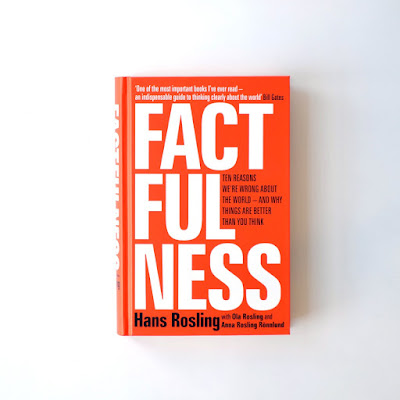
But a few days ago I can across a book as welcome as a pint glass of chilled spring water in a hot desert.
This:
I so recommend it to you.
I feel such admiration for the life out of which it was written — calm, sane, careful, disciplined, meticulous, kind, brave, adventurous, intelligent and compassionate.
It is about the imperative of establishing facts rather than succumbing to the allure of a dramatic world view.
It is informative and restorative. It re-establishes a sane perspective in a somewhat hysterical world.
Written with humour, forbearance and humility, without blaming or attacking, with both gentleness and authority, Hans Rosling's beautiful book brings balm to the fevered mind. I am so glad he wrote it, the last — posthumously published —work of a life dedicated to clarity and compassion.
The picture of the cover above is linked to Amazon UK — so far the book is only on pre-order in paperback, but you can buy it in hard-back or read it on Kindle now.
US Amazon has a slightly different cover, but it appears to be the same book and out now in hardback and Kindle. I've linkified this image too.
Facebook is a wonderful phenomenon; I love the friendships made there, the intriguing and informative articles, the humour, the pictures and so much more. But in the end the antagonism, the drama, the rudeness and the sense of too much information became a strain; unhealthy and destructive of peace.
I've found in recent years the anxiety that has dogged my life growing to problematic levels; stopping me working, snagging at every happiness, sapping vitality. Setting boundaries and pruning connections, observing the discipline of a plain diet and a quiet life have become essential; Facebook had to go.
But a few days ago I can across a book as welcome as a pint glass of chilled spring water in a hot desert.
This:
I so recommend it to you.
I feel such admiration for the life out of which it was written — calm, sane, careful, disciplined, meticulous, kind, brave, adventurous, intelligent and compassionate.
It is about the imperative of establishing facts rather than succumbing to the allure of a dramatic world view.
It is informative and restorative. It re-establishes a sane perspective in a somewhat hysterical world.
Written with humour, forbearance and humility, without blaming or attacking, with both gentleness and authority, Hans Rosling's beautiful book brings balm to the fevered mind. I am so glad he wrote it, the last — posthumously published —work of a life dedicated to clarity and compassion.
The picture of the cover above is linked to Amazon UK — so far the book is only on pre-order in paperback, but you can buy it in hard-back or read it on Kindle now.
US Amazon has a slightly different cover, but it appears to be the same book and out now in hardback and Kindle. I've linkified this image too.
Monday, 7 May 2018
Green pastures and still waters
The times we live in leave me struggling.
The two aspects that most deeply disturb me are war and lies. Both of these spit in the face of God — and as George Herbert posted out, "Who spitteth against Heaven, it falls in his face." There is no just war. There are no justified lies. I see both war and lies proliferating, and I see the proliferation of war justified by a proliferation of lies, and it grieves not only me but the Spirit who dwells in me. I see the reach of Mammon growing exponentially, and I feel deep foreboding about it.
There is so little I can do. Only uproot the seeds of war from my own garden, and turn away from dishonesty, embrace authenticity, speak the truth. Though — heheh — sometimes speaking the truth can start a war, can it not!
Recently — in the last year — I've had a feeling of lagging further and further behind. It is as though the world no longer has a place for me. I've felt a kind of pervasive, spreading despair. Where can I be? Where do I belong? Where is peace?
When will you ever, Peace, wild wood dove, shy wings shut,
Your round me roaming end, and under be my boughs?
When, when, Peace, will you, Peace? I'll not play hypocrite
To own my heart: I yield you do come sometimes; but
That piecemeal peace is poor peace. What pure peace allows
Alarms of wars, the daunting wars, the death of it?
The two aspects that most deeply disturb me are war and lies. Both of these spit in the face of God — and as George Herbert posted out, "Who spitteth against Heaven, it falls in his face." There is no just war. There are no justified lies. I see both war and lies proliferating, and I see the proliferation of war justified by a proliferation of lies, and it grieves not only me but the Spirit who dwells in me. I see the reach of Mammon growing exponentially, and I feel deep foreboding about it.
There is so little I can do. Only uproot the seeds of war from my own garden, and turn away from dishonesty, embrace authenticity, speak the truth. Though — heheh — sometimes speaking the truth can start a war, can it not!
Recently — in the last year — I've had a feeling of lagging further and further behind. It is as though the world no longer has a place for me. I've felt a kind of pervasive, spreading despair. Where can I be? Where do I belong? Where is peace?
When will you ever, Peace, wild wood dove, shy wings shut,
Your round me roaming end, and under be my boughs?
When, when, Peace, will you, Peace? I'll not play hypocrite
To own my heart: I yield you do come sometimes; but
That piecemeal peace is poor peace. What pure peace allows
Alarms of wars, the daunting wars, the death of it?
(Gerard Manley Hopkins)
We went out to Alfriston just before the hot weather came, at the end of the wild days of wind and rain, on a cold and breezy spring day of clear sunshine, to visit the clergy house by the village church. They have lots of photos of it here.
I hadn't been there for forty years or more, but it was vivid in my memory.
I loved it, and looked at it all over, then went out to sit in the garden.
It is built just by the river, full from the spring rains so that the branches dip down to the water.
The last person who lived there was Harriet in the nineteenth century, and the vegetable garden is laid out as a traditional cottage vegetable patch would be.
The formal garden nearer the house itself is created from clipped hedges and trees of box and yew, with beds of old English herbs — pinks and lavender and rosemary and so many more. Herbs that I have known from gardens I have loved my whole life long.
Do you know the song King Jesus hath a garden? The words of it are here, and here is the choir of Kings College Cambridge singing it. The garden at the Clergy House at Alfriston reminded me of that song.
What struck me particularly as I sat in that garden was its restraint — the green simplicity of it. The orderly vegetable beds and formal hedges, the herbs and old English plants.
It was full of peace. A retreat from the urgency and clamour of the modern world. A place where the spirit could thrive and be restored. It had such a strong feeling of happiness, as though it was a person as well as a place. If there is such a thing as happy ghosts, they were there. Somebody had dearly loved that place, and been happy there.
It showed me how to live, made a way in.
I am so glad it is there.
Subscribe to:
Posts (Atom)