Tuesday, 31 August 2021

Redeeming the time

 I sometimes wonder — I expect you do as well — why we are here; what it's all for, if there is a point to it. I usually conclude, as others also have, that whether or not my life has a point inherently, I can make it have a purpose and decide what that purpose will be, by my choices and actions.

Recently I wondered about it all over again. Because I have a lot of pain and not much energy (and high-pain days are low-energy days), it's difficult for me to attempt a great deal and unwise to do any forward planning or make commitments. On the best days I can take a bus into town as well as doing my chores and housework, maybe some sorting and tidying and reading; on the less good days I content myself with watching uplifting videos on Youtube, and thinking. What is the point, I asked myself, of such a life? What point can I make it have?

When I ask myself this question I invariably recall the one thing that stuck in my mind from the Church of England catechism I was required to be read for my confirmation when I was eleven — that the purpose of man is to serve God and enjoy him forever. 

Quite apart from feeling excluded from that entire plan by its relentless masculinity, I am not sure what it even thinks it means. God is silent and invisible, and too big to conceptualise. We create shadows on the wall, projections in our own image, and call them God, and seek to impose them on others. Knowing which one is God and which one is the projection, knowing how much of my own intuitions and glimpses are actual God and how much my own imagination — this is not easy.

There have been people who believed they were serving God by tying women up and burning them alive. Even in the modern world, there are people who think they are serving God by pushing gay men off the top of high buildings and beating their wives and children, and blowing people up. Personally, I think they've got it wrong, but they are, I suppose, sincere. 

And it is, in my opinion, difficult to enjoy God when one has been taught the divine being will condemn us to eternal torture if we do not correctly intuit and acquiesce, in the practise of our faith. Such a God does not sound like someone whose company I would enjoy.

But something else that has floated to the surface of my thoughts as I mulled all this over, is the wonderful Japanese phrase "ichi-go, ichi-e", meaning something like "one encounter, one chance"; an evocative expression of the helpfulness of staying in the present moment and cherishing it.


So I have re-calibrated my aspirations with that in mind.

Because I am not capable of much, I am making my goals small: just to aim at blessing the myriad mini-events/encounters of my everyday, so that to everything I do, each meeting I have, I bring blessing.

I think that can be by appreciation — of the birds, the sunrise, the tree outside my window, my books and clothes, my room, my bed, my chair, my porridge for breakfast, my cup of tea — and also be by kindness; believing everyone I meet is doing the best they can, imagining everyone at this moment alongside me as my best friend, remembering to smile and encourage and listen attentively and make people feel wanted and loved.

I feel quite satisfied with that as enough to be the point of my life. I don't even want to be the Prime Minister or own a castle in Scotland or be famous for my marvellous achievement or abnormal strength or beautiful face. There is nothing I want that I haven't got (apart from some vegetable bouillon, but they sell that at Asda), nowhere I want to go, only a few things I still want to do: but I do want my life to have a point. So let that be my purpose; to bless each person, each encounter, to appreciate and listen and encourage. That'll do, eh?

I humbly hope that at the end of it all I might find I was serving and enjoying God the whole time.

Sunday, 22 August 2021

Thoughts about self-reliance

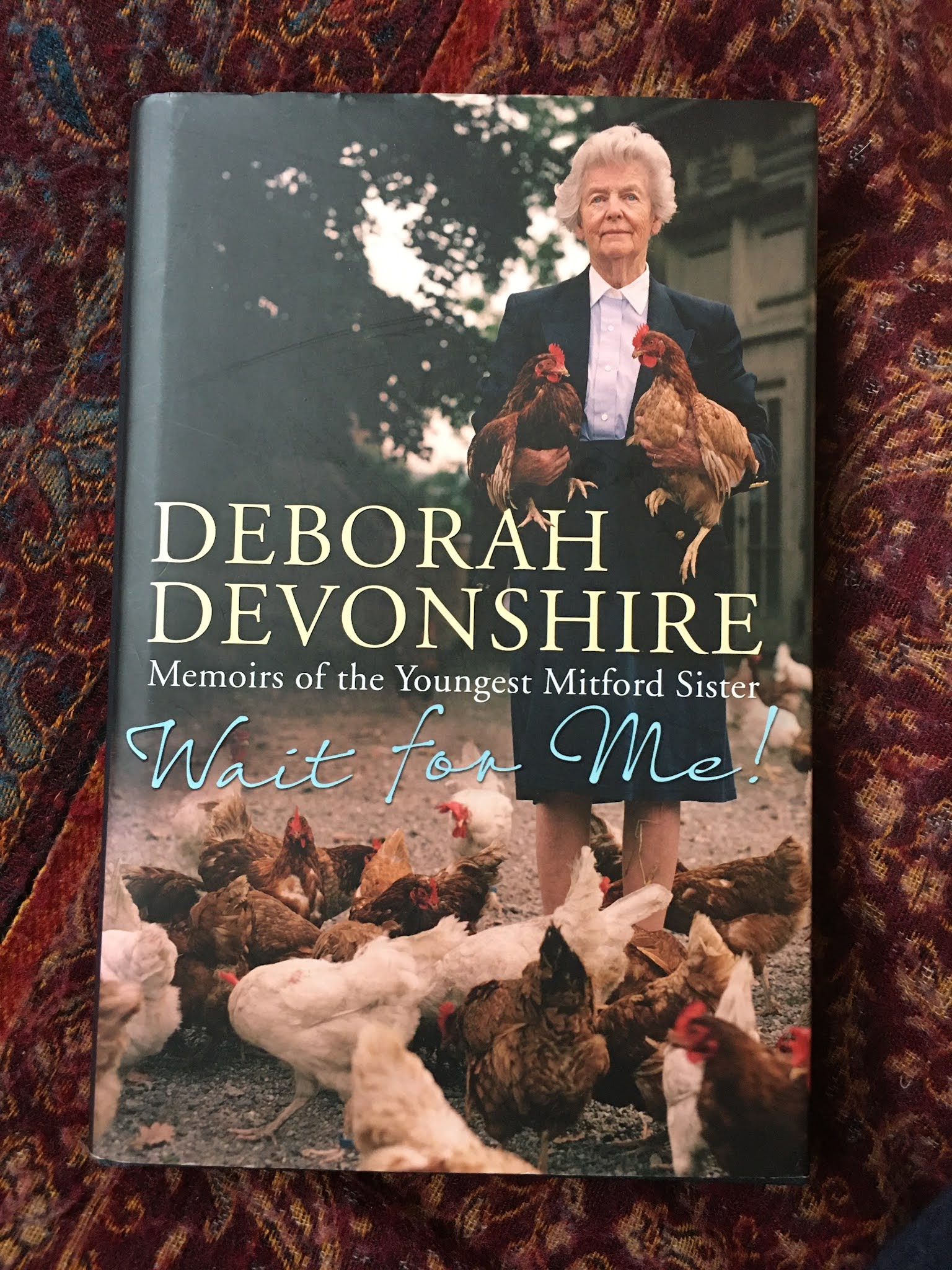
I’ve been reading the book I bought of Joyce Grenfell’s letters to her mother, dipping into it here and there.

Its contents span the years between 1932 and 1944. I am always intrigued to notice how — without our really being aware of it or applying any particular intentionality — our attitudes change with the passing of time, and we end up with quite different perspectives on life from our original outlook and understanding. Nowhere has this been more starkly true than in our evaluations concerning sex and racial prejudice — both of which have undergone a revolution in recent times, and so much more ground still to cover.


I’ve been thinking a lot about self-reliance, and its place in our lives — to what extent we may be responsible for our wellbeing, and how much we depend on each other.


Internet algorithms mean the articles that appear under our noses reflect and relate to what we have already considered — which encourages us to swim along a deepening and narrowing strait, and can give us the false impression that “everybody thinks” or “the fact of the matter is”, when in reality the opinions and possibilities are more diverse.


Probably because of my political inclinations, quite a lot drifts my way about The Authorities, usually in the vein of how woefully inadequate they are, falling down on the job and not doing enough for us.


In my Joyce Grenfell browsing, I came across a letter from August 1937 — so, 84 years ago (!) — about a car crash that happened near Joyce’s home. 


It’s quite a long section to type up, so I photographed it for you — can you read it okay? I think if you click on the photo it should come up bigger.


So many points of change (since 1937) struck me when I read it!


  • Almost nowhere is dark now (a few places still are).
  • Very few people own or wear dressing gowns.
  • Most people, if they heard a car crash, would immediately phone the emergency services — probably not first run out in their dressing gowns to see what had happened.
  • It is highly unlikely modern people would pick the car up, right it, check it over, and pronounce it okay to drive.
  • Most people would insist on a doctor seeing the people who’d been in the crash.
  • The prospect of a modern Harry offering a ride in his car to two girls he’d never met, and their accepting the offer, is startling.
  • That the man got back in his car and drove it away is astonishing to us now.
  • At no point did anybody think of calling the police.


There is so much that’s different, and all around issues of trust, what is likely/acceptable in public spaces, and what people think it reasonable to do for themselves without involving The Authorities.


In the years I grew up I could easily imagining this playing out, but not now. 


We have come to rely very heavily on The Authorities. Where I live, most people won’t even shovel the pavement outside their house clear of snow; they sit inside complaining bitterly because the men from the Borough Council haven’t been to do it. They complain about the weeds growing at the edge of the road and blocking the pathways, but rarely does it occur to them to weed the section outside their home. Sometimes. Not often.


This morning over coffee, our Alice was recounting an incident she had read about in America — I don’t know where, but one of the states where it gets very cold. She said a whole family had perished in a power outage. With no electricity to their home they grew desperately cold, and had the idea to sit in their car, in the garage, letting the engine run to warm them up.


I’m sure that immediately triggers your inner uh-oh mechanism — and yes, they all died of carbon monoxide poisoning, which was an absolute tragedy.


But the news item included information about a relative who lived some distance away — an uncle, I think — who had become alarmed when he failed to contact them after repeated attempts. He called the police, who said they’d go round and check. They did. They knocked on the door, got no answer and went away.


Apparently the uncle called repeatedly and the police responded more than once, but every time only knocked and left.


Apart from it being so sad, the thing that struck me especially was the take-away from this scenario offered by the news item.


What it focused on (according to our Alice, I haven’t come across it myself) was a conclusion that this was an example of racism in the police. That they hadn’t taken more decisive action because the family was black. I don't know how they reached that conclusion if nobody answered the door. 


But it did cross my mind that there was another potential take-away from the scenario, never considered or discussed, which was this: families do well to be prepared for emergencies.


It doesn’t take much. For my part, I refuse to live anywhere that does not have a working fireplace, because I have lived through some passages of considerable poverty, and can well envisage needing to keep warm by burning scrounged packaging and foraged (discarded) wood. I also insist on installing a water butt and locating a spring, and investing in a very good water filter, just in case our water is ever cut off. Wherever I have lived, even if all I had was shared outside space or a hard standing meant for a car, I have always planted something to eat, and found out where wild things to eat grow. I am not a prepper as such, but I keep a small stash of basic things like oats and lentils in case there are food shortages or I run out of money — and my garden has as many fruit trees growing in it as the space permits.


Now, I recognise that many people don’t have a garden or the chance to live in a home with a fireplace, and may be rental tenants who have no permission to instal water butts. I come of a family whose immediate response to every suggestion is a bustling stampede of objections, so I can well imagine any you have in mind. 


But the point is not the specifics, rather, the principle.


If you live in Minnesota (or anywhere that gets similarly cold), in a house with no wood stove or open fire and depend entirely on electricity for heat and light, then before the winter draws in, get yourself:


  • Matches
  • Some bio-gel chafing fuel tablets you can burn safely indoors
  • A stovetop kettle and a Trangia (or similar) stove to stand it on
  • A hot water bottle (each)
  • A wool hat (each)
  • Blankets
  • A thermos flask
  • A water carrier of some kind
  • High-energy long-shelf-life food
  • LED camping lights (keep the batteries charged or have spares)
  • A bucket toilet (and bokashi bran to neutralise pathogens) in case the house water freezes


Be sure that you have the water carrier kept full indoors in the worst of the weather, so that if the power goes out in deep cold you have water that won’t be frozen. Keep that for drinking, fetch in snow to melt for the hot water bottle. Fill the hot water bottles (use the chafing fuel tabs to boil the kettle), and the thermos. Sit in one room together, wrapped in blankets, with hot water bottles, for warmth. Eat the high-calorie food. 


Always keep phones charged so that if you get caught by a power outage, you have a charged battery to start.


DO NOT sit in a car in a closed garage with the engine running. Do not run or burn anything that will compete with you for oxygen, for any significant length of time, in a closed room. Warm yourself  — don’t heat the space, heat the person — and maintain an air flow. Wear a hat, because your body will sacrifice all warmth to keep your brain temperature stable, so you stress the body less if you insulate your head. Keep any places warm where arteries rise to the skin surface (wrists, neck, ankles).

(I appreciate that it costs money to buy a stash of emergency provisions like that, but it also costs money to buy and maintain a car and fuel it.) 


If you are ever in a similar position to that poor family in America, keep in mind that your uncle in a neighbouring state may call the police and they will come to help you; and if you have such a stash of supplies, they might find you alive.


Whatever colour we are, and however poor we may be, it is always worth seizing whatever chances come our way, to make up a box under the bed for the day when the unforeseen emergency happens.


As Joyce Grenfell’s experience demonstrates, you don’t always need to rely on The Authorities. As that tragedy of the family in America demonstrates, The Authorities aren’t always much use even if you do rely on them.


We must do our best to work for a society in which everyone is cared for and no one left behind; but until we’ve got it (and even after we have), a few low-key preparations in case of emergency never go amiss.


Saturday, 21 August 2021

Do you wear aprons?

I think aprons exert a thoroughly positive influence in the world — and mine especially would if I remembered to wear them.

Only this lunchtime I had to wash a sleeveless cardigan I got chocolate on (and that was after having successfully removed the coleslaw I dropped on it; we had moved on to our dessert), and just a couple of days ago I spilt some porridge on a yellow top, and had to take it straight off and thoroughly wash the mark out to prevent it becoming a stain. But this is my own fault entirely because I like eating sitting in an armchair with my family instead of at the table in the front room (which I do when I'm alone), and because I forget to put on my apron.

I have had one of those cross-back Japanese-style aprons (like this) for a long time, but it drives me wild because it slips off my shoulders when I bend down to weed the garden or fill up buckets or whatever. So I bought three 1940s-style aprons from eBay. Like this.


That won't be slipping off any time soon, will it?


Perfect.

It's good for washing up and chores in general —


— but it is especially important to remember to put in on when I'm getting supper for the Meeps.

Here's Meep, standing on the water butt outside the window. He raps on the glass if we're tardy getting his tea, though he is a patient and good-natured bird in general.


Mrs Meep sometimes joins him on the water butts, or waits on the wood store roof (where we feed them) if she senses the moment drawing near.


Their food is revolting.


You can see why an apron is of paramount importance — cat food pouches and sardine tins both flick their noxious contents onto the unwary opener.

But they enjoy it immensely.


And they rely on us entirely. Meep was entrusted to us from childhood. His mother still watches fondly from the neighbours' roof, and exults in a victory cry when she sees Meep being given his breakfast and his supper.

But, oily fish . . . oh my . . . 

It's what aprons were invented for.

Friday, 20 August 2021

Waving from England

 How are you doing, darlings?

I confess I have nothing in particular to say — no exciting things happening where I am, and the world news is the usual sort that makes you want to go out and shoot yourself, so maybe best ignored.

Having no insights or reflections to impart, you will just have to see this as a letter from your English aunt.


Right now in our house, one of us is just up the stairs from my room, in the attic, playing jigs and reels on the violin, fast and with determination. Meanwhile, two doors along, another of us is working slowly through a new and unfamiliar piece of music on the French horn. Oh. She's moved on to the flute. Wait — they both have. I didn't even know Hebe had a flute. In the room next door to me, Tony is working silently and persistently on the endless editing and correspondence that dominates his life. He's just taken on editing the newsletter for our local expression of the Green Party. Tomorrow he's going to a protest about our water company that cuts corners and dumps raw sewage in the sea.

It took us a while to get back into anything that could be called a "habit" of venturing forth after so many months locked down, but once I noticed that Tony had started going out to lunch and coffee with writers and politicians and dignitaries of all kinds, but not with me, I staged my own protest and we are back on with the coffee and lunch dates we long ago used to enjoy.

So this morning we went on the bus to Hastings town centre where there's a newish coffee house called Hanushka, the interior walls lined from floor to ceiling with bookshelves housing donated books you can borrow or buy or add your own. What a wonderful idea!  

Naturally we couldn't come home without a book, so after we'd finished our hot chocolate topped with a towering mountain of whipped cream and marshmallows (yes, it will kill us, but we both do it so we'll weigh the same and die together) we selected something we couldn't possibly leave behind — in Tony's case a novel by Wilkie Collins with a magnificent cover of stern Indians and the Buddha —


and for me, this


and this.


But first I must put my foot on the accelerator and finish off this novel.


It is good, but the author gets bogged down in quips and cleverness rather to the detriment of narrative depth. Enjoyable, but possibly not memorable. I may even put it aside in favour of one of the others, though I think I will forget who all the characters are if I do that.

Before I do any of that, though, I'm going downstairs to get myself a cup of tea . . .

Et voilà!


I take (unhomogenised, organic, whole) milk in tea, but it comes in one-litre flagons, which take me several days to use up, such that it is perilously near cheesy before I reach the end. In consequence, I have to buy (oh, such a shame) dear little bottles of very delicious iced café latte from Marks & Spencer, so I have something to decant my milk into and then I can freeze it. You can immediately grasp the necessity, I'm sure. I defrost one every day.

Blessings on your day. May you be contented, may you be peaceful, may you carry around some quietness inside you, as George Fox recommended us to do.


Tuesday, 17 August 2021

Naturally contrary

At bedtime, every night, summer or winter, I make myself a hot water bottle for my bed and a glass of chilled water with several ice cubes in it.

I find the warmth of the hot water bottle sort of comforting, like an animal, and the chilled water makes me feel peaceful and rested.

And I love the night air. I close my window at night when it's really freezing in the winter, but only then. All the rest of the year I have it open all the time. I close my shutters so mosquitoes don't come in and bite me (semi-successful), but I sleep right under the window so I can still sniff the night air.

Sometimes when the night is warm, I fold back the duvet because I get hot, and I tuck the hot water bottle under the most insulated place where it's not in contact with me, so it can't make me even hotter but I can stretch my foot out and touch it if I need to remember it's there.


Sunday, 15 August 2021

A yellow t-shirt and a child waving

Before I got sidetracked by contemplating Brody, it had been my intention to tell you about my yellow t-shirt.

There's a ladies' apparel firm whose clothing I like. I have bought a dress from them but nothing else, because (though their things are not unreasonably priced) my budget is modest and anyway I prefer to buy second-hand to ease the strain on Earth's resources and reduce what goes to landfill. So I have a skirt from this firm courtesy of eBay, and two sleeveless cardigans, and in the past have had tops (I regret sending those away now, they were good); and I often look on eBay to see if there's anything else in my size and colour palette.

Recently, there was. Someone just along the coast from me in Brighton had listed several tops — brand new with tags, still in their packets; not this season's but none the worse for that, in colours I loved (soft sea greens and blues, buttery golden yellows, etc.) A t-shirt from this company is £45, and a lightweight summer sweater is £69 or £79, depending which range. This eBayer had that kind of thing on auction at an £8 start (and free postage) — the accompanying legend said they were from a house clearance, so maybe the eBayer had a rich old aunt (now deceased) who just kept buying them because they were pretty.

So I placed an £8 bid on the first item coming up for auction, which was about £61 less than it would have been in the catalogue. The opportunity was offered to get if for £18 on buy-it-now, but £18 would be a lot for me, so I waited, and mine was the only bid! £8! Result!

Some days later, the next item — a beautiful scoop-necked top in a quiet grey blue came up for auction, at the same price and with the same outcome! Again — result!

The eBayer began his despatch note with: "Hello again, Pen . . ." 

So I sent a note back saying, "Why is no one else bidding on these lovely tops? I think they're fab."

He wrote back to me, wondering if perhaps the tops being size XL was putting people off. This betrayed a certain lack of sophistication — possibly not the most tactful remark to make to the person who had bought them (?), since one must deduce her to be traditionally built, to use Alexander McCall Smith's timeless phrase, but never mind that.

I replied saying I thought the problem likely to be that this brand is a favourite with posh old ladies so they might a) be less au fait with the internet and b) buying their clothing new, not on eBay. I explained that I, too, am a posh old lady, but also poor and wily.

After I sent this message, I noticed that for his forthcoming auctions he (also wily) had adjusted his pricing, reducing the buy-it-now from £18 to £15, but increasing the auction starting price from £8 to £10. I felt unreasonably annoyed by that, because I was enjoying bagging these items at £8, and there were two more things I wanted from what he had listed. 

I considered not bidding, and contenting myself with the two bargains I had.

And then he replied, saying that after he'd paid for postage he was making only about £2.48 on these items, and I imagined him going to all the effort of printing off labels and packing things up and checking the details were right and trudging along to the post office, and it seemed so sad. So the two remaining items I wanted, I bought on buy-it-now, so he'd make a better profit (albeit still small), and I apologised for not getting them at the same time as the blue top, which would have put him to less trouble and cost him less postage: and he said, "Thank you so much."

Then, when the parcel came (this man despatches things with admirable promptitude), I was so touched and surprised to discover he'd tucked in with the ones I'd bought a further free top in the same kind of colour — just perfect for me. 

And I sent him a happy thank-you note, and he sent his love.

What interests me particularly here is that, though it seems clear neither of us has much money, what elevated it into something joyous and lovely was what we gave. Getting those things on buy-it-now meant I spent £10 I need not have, but what's £10 in this day and age? It would hardly buy you tea and buns in a café. Sending me the extra top meant he forfeited the extra tenner I'd sent him. But, look what that £10 shuttling back and forth bought us! The sense that someone cared, that the world is kind, that there is hope after all, that humanity is not bankrupt and everything might be all right. All of that. And a feeling of warmth and cheerfulness and gratitude. How could you buy all that for ten pounds?

This is what it means to interweave the grace/gift economy with the regular currency of money. 

And then a couple of days after that, something else happened.

I was feeling lonely and discouraged, and spoke to myself sternly, "Come along, Penelope, do something. Go somewhere."

I can't walk all that far because my feet and legs are too painful, but I thought I might catch a bus down to the pier, and buy an ice cream, and sit and eat it looking out over the sea.

So I got the bus down to the sea — but much to my surprise, no one on the pier sold the sort of ice cream I had in mind (the soft, whipped sort in a cone).

So I walked along into the town centre where I knew there was an ice cream van, and got one there. All the benches standing around in the square at the centre of the shopping mall had people already sitting on them, so I sat on the low window sill of a closed down clothing shop (probably everyone bought their wares on eBay, not new, and pushed them over the edge into oblivion) to eat it there.

My foot was hurting and I'd walked too far and felt tired and despondent. The ice cream was just what I'd had in mind, but the place felt as cheerful as communist Russia in the rain — even though the sun was shining and nothing was really wrong.

But then something happened that made all the difference. Two young women walked slowly by me, between them a little girl, perhaps four or five years old, with dark hair up in a jaunty, swinging pony tail, and she was holding the hand of one of the women, presumably her mother.

As they passed, the women were chatting to each other, but the little girl kept glancing back at me. And when they'd gone a few yards, she turned back and waved and smiled to me — and I waved and smiled back to her. 

Her mother looked in surprise at her and at me, and she smiled too. And they went on their way. But I stowed in my heart her smile and her wave, and it made me happy. Why did she do it? I have no idea.

But that, too, is part of the grace/gift economy — something that costs nothing and means everything; something we all can give.


Saturday, 14 August 2021

Brody

I was going to tell you about a yellow t-shirt and a child waving, as an illustration of the happiness of grace/gift economy, but there's something else I want to tell you about instead because it made me laugh (I'll come back to the t-shirt and the child tomorrow).

Let me say at the outset that it makes clear you may not know when you're standing next to a novelist who is making mental notes of everything you say.

This happened when I went to Asda to get some donuts in preparation for seeing my grandchildren later in the day. If you have read my book The Wilderness Within You (it says the publication date is January 1897, but I assure you that though I am old I'm not that ancient) then you'll know all about the crossing at Silverhill, which is where I was today, waiting for the pedestrian light to go green so it would be safe to cross the road.

I wasn't alone. Alongside me — we are Covid-adapted these days and keep careful little moats of space around ourselves — stood a young woman with her small son. He must have been about eight. I quickly learned his name was Brody.

The sequence of lights in Silverhill means that crossing in the direction we were going requires patience. As we stood there, waiting for one stream of traffic after another to take its turn before our go came round, Brody's mother became anxious about the plastic picnic bottle with orange juice in it that he was carrying. 

"If you drop that," she said, rather more loudly and aggressively than was entirely warranted (I thought) "you won't be picking it up!"

Brody sounded puzzled. "Who will, then?" he asked, bewildered.

"No one!" exclaimed his mother, with a certain amount of relish that baffled Brody further.

"Won't you?" he asked.

"No I will not!" she exclaimed.

"Why not?" Brody asked her, mystified.

"Because this is a busy, dangerous road!! Do you want me to get killed!?"

Brody probably didn't but he may have wondered for a moment.

His mother warmed to the subject. "If you drop that bottle," she said, "It'll just have to get run over. It'll be gone. You'll have lost it."

"We'll have to get another one," Brody suggested.

"No we won't!" countered his mother. "Do you think I have money flowing out of my backside?!"

Brody didn't say.

I confess at this point I was so captivated by the prospect of the young woman at the crossing standing there with money flowing out of her backside that I became momentarily distracted from their conversation and didn't pay attention to Brody's reply. But it triggered a stream of dire warnings from his mother — "Don't speak to me like that or you'll get nothing! We won't go into town! We'll go straight home! Do you want to go into town — (etc etc etc)"

Thank the Lord, the lights changed then and I didn't have to listen to her any longer.

No such luck for Brody.


Friday, 13 August 2021

Balancing monetisation and simplicity

The practice of simplicity and the art of relinquishment are necessary to the pursuit of truth and to personal freedom (see yesterday's post) because vested interest inevitably compromises freedom and truth. 

But though it is possible to live without money, few of us manage to scale those heights of simplicity; for most of us it is about living on and with less rather than cutting our ties with money altogether. 

It is urgently necessary for the life of all of us — for the survival of Earth — that we sharply cut back our habit of consumerism. Here in the UK this year, it was in May that we passed the day when, as a species, we had reached the limit of what it was possible for Earth to regenerate in our consumption for this year. Last year, because of the pandemic and lockdown, it was September. So just by living quietly and reducing what we do, we can radically lower our consumption and live within the limits Earth needs us to set.

So we know simplicity and relinquishment are necessary for truth and freedom, and also for life. We accept that some level of monetisation and consumerism will continue to be part of our reality. An obvious question arises — how much, and what, to monetise?

I personally believe each person's work should be like a bird singing its song, fashioning its nest — inextricably connected with and proceeding from who that bird really is. Our work — the way we earn the money we need to live simply — should express and develop our individual calling and natural contribution. There is a sweet spot we can find, where we give and let go, where we live humbly and quietly, where we take just enough and then stop, where we provide responsibly for ourselves and our families but ask for no more than that. "Problems arise where things accumulate" (Toinette Lippe, Nothing Left Over), and the signs of over-reaching ourselves are inauthenticity (lies and pretence, lack of enthusiasm for our work), exhaustion and complication. Our work, if we're in the right occupation, should actually generate energy as well as use it. If it leaves us drained and resentful, it's wrong for us.

In the aspects of life I have monetised in order to live simply, I have been most pleased with the work I did directly. For twenty years or so I officiated at a lot of funerals. If it was the funeral of someone I knew and loved, perhaps it should go without saying that I did not charge money for doing that. If it was someone with whom I had no connection at all and the family came looking for me just because they knew I'd do a good job for them, then I charged whatever was a standard fee (if this varied, I asked the lower amount). I felt conflicted in situations where I knew and cared about the person who had died because I was their minister and they were in my congregation, but the usual advice and practice was for a minister to accept a fee. I can't remember what I did about that, but I think I went with the advice of colleagues to accept the fee. Had I not, it would have unbalanced things for other people. I went with what I thought was right and sometimes I waived it. But what was really good about officiating at funerals was the direct nature of the work. The people who paid me — the family or friends of the deceased — sought me out for the quality of my work, I did not try to market anything or promote myself; they looked for me. They paid me, and they were directly on the receiving end of what I did. If what I offered had been substandard, that would have been the end of it. And though they did pay me a fee, I always asked myself what I could add that would simply be a gift; which was mostly the quality of what I gave, the care with which I listened to them and crafted the ceremony, the love I brought and the ability to anchor the Light into that place and occasion — the aspects you cannot buy.

I also like the route of self-publishing, in working as a writer. 

Writing has to be monetised in some sense if one's work is to be made available in book form (paper or e-book). If you have read my novels or my non-fiction, you will have touched an aspect of my life that I have monetised. It wouldn't have been possible for me to share my thoughts with you otherwise. All day long, every day, I make up stories in my head that you will never know; they are only for myself. In order to give them to you as a book, I'd have to process them in a manner that inevitably monetised them, because I don't have a printing press or an advertising and delivery system. But that said, I have given away my free copies (and even bought my own books to give away) and recorded some of my books on my YouTube channel and sometimes given away PDFs of my work; and I decline the opportunity to monetise this blog by permitting Google to place ads on it (the platform is Google Blogger). 

But writing, like funerals, is pleasingly direct, even if you publish with a publishing house instead of doing it yourself. A publisher won't be interested in Volume Two if Volume One didn't sell. It's not a racket, people just buy your books because they want them. Marie Kondo comes to mind. She wrote about what she really lives, and her book was a runaway success, because it's good — and the same is true of Fumio Sasaki. This is work that is honest and true, that flows from the wellspring of real life, that benefits the reader as well as the writer; and the Earth will also benefit from the practice of what those books advocate. They advance freedom, simplicity and truth even while they monetise it — and that's what true work is; the sweet spot.

I have more thoughts about this but it's 12 minutes past 6 and if I don't get up and have a bath my morning will go wrong — besides which there are plenty of thoughts here and you will get tired if I go on and on. I want to say something about how monetisation and grace economy can interweave, but perhaps better leave that for tomorrow.


Thursday, 12 August 2021

Freedom

If you've read much of this blog over the years we've been travelling along here on and off in each other's company, you'll have come across posts where I've written about a prison fellowship I used to attend in the first half of the 1990s. Here's one of the places where I mentioned it.

And in this post I touched upon something counter-intuitive that struck me in being part of that Tuesday night fellowship at the prison — the freedom a person finds in losing everything.

Everything that most of us value — our homes, families, pets, occupation, place in society, liberty to come and go as we please, to have what we want (according to our means), to spend time with friends, to go for a walk in the country, to eat what and where we like — all this you lose if you go to prison. Your freedom is taken away from you.

So I found it very striking to encounter this sense of freedom as I interacted with these men — that they didn't need to pretend or live up to anything; they were simply appreciative of the opportunity to meet together and spend time with us. We met them at the place of least pretence. 

The memory of that time was recalled for me today as I turned over in my mind the relationship between simplicity, freedom, truth and vested interest.

It seems to me that wherever there is vested interest — something a person is concerned not to lose, something to defend — then simplicity, freedom and truth quietly diminish.

The crucial components of this are belonging, money and shelter.

In the modern world, it is almost impossible for anyone to do anything without money. It can be done — Daniel Suelo, Peace Pilgrim and Heidemarie Schwermer have all borne witness to that — but for most of us it is so difficult as to be unthinkable; you need a powerful sense of call to manage it.

So if you can hook up a person's ideology to their income stream — as happens with clergy and politicians and (perhaps less obviously) health professionals, among others — their freedom flatlines. They are on a leash. They have to toe the party line. There is too much at stake if they don't.

If, in addition to their income, you can link their home to their ideology and their avowed perspective, it allows you to embed and establish them in that declared outlook on life for ever. Nobody wants to lose their home, and if they also have children and a spouse financially dependent upon them, the imperative to preserve the status quo substantially increases.

But even people whose home and income don't depend on adherence to a particular religious/political/moral/conventional/scientific stance can be brought into line by the desire to belong, to be included, to have others think well of them.

People don't want to lose their followers, their good standing, their status, their friends. The Amish practice of shunning is a most effective way of maintaining adherence to a world view and silencing dissent or scepticism.

So, to my way of thinking, part of the practice of gospel simplicity is abstaining from allowing vested interest to accrue. St Paul touches upon this in the first letter to the Corinthians, as part of his directions concerning marriage — he points out here how freedom diminishes as vested interest increases when a person accepts the responsibility of marriage relationship.

If being part of an ideological tribe is in the mix, or adherence to a scientific world view (often manipulated by commercial forces); or if a preacher of the gospel is committed to a theological standpoint if he wants to keep his house and job; or if political allegiance is linked to remuneration — then of one thing you can be absolutely certain: you will never hear the honest truth from that person again. They will not even be able to access it. There is too much at stake.

The bearded man in this video explains well the kind of thing I'm thinking about — the corrosion of freedom, truth and simplicity brought about by vested interest.


I don't see life quite as he does, because I know I am happy some of the time. To be fair, the question was dropped on him. Looking at his face, I see a kind and gentle man; I feel it likely that to help and to give and to heal makes him happy. I think the trust of a child, or a bird that would feed from his hand would make him happy. I know these are the kind of things that bring contentment to me. The simple things. As it says in Les Miserables, "To love another person is to see the face of God."

I share his heartache but, oddly (and I'm not sure why), not his sense of foreboding. Some stubborn, unquenchable whisper inside me says, "All shall be well, and all shall be well, and all manner of thing shall be well."  I know I might be wrong, but I cannot deny it.

But the pathway to wellbeing passes through simplicity, freedom and truth, and all three of those are corroded by vested interest.

Useful and realistic