Saturday, 16 March 2019

Wind's blowin'

It's a blustery, wild old day on the south coast of England. March has done its thing and come in like a lion, but is nowhere near ready to go out like a lamb just yet.


My crow's come to see what I'm doing, which is hanging out the laundry.


I have to hurry back in and get some food for him. Or her.

Interested.


Got a good beakful.


A bit worried about the camera.


Spring's advancing. The celandines are out —


— and the fruit trees are well in bud. Our blackcurrant bush is in leaf.


Hanging out laundry takes a while, because you have to peg everything carefully, especially on a very windy day. So I think as I'm pegging.

I think about the song that says "Everybody talkin' 'bout heaven ain't going there," and how important it is to get your grammar right, because of course what they really meant to say was "Not everybody talking about heaven is going there," which is entirely different. As things stand, the singer excludes him/herself from heaven too.

I think about teeth and wonder what to do about mine. Having given me no trouble all my life, now they are.

I think about climate change, and Brexit, and how we can best respond to life's challenges without making ourselves utterly miserable.

I think about this film coming out in May, and how very much I want to see it.

I think about my mother and wonder what's the best thing to do about her. This week has included a couple of trips across to her place in the middle of the night, because she presses her lifeline button and thinks she's dreaming the woman on the speaker phone asking her if she's all right. Hmm. 

I wonder what to cook for lunch.

I think about seagulls and crows, about clouds and planting beans. I think about the church quiz night this evening.

All the ordinary, everyday things that make up a human life. And earth is, after all, just that pale blue dot caught in the middle of a sunbeam. Things matter so much and at the same time not at all.

So I come back in here, and sit on the bed with my friend, who has the right idea of how to spend a windy day.


Thursday, 14 March 2019

Tom Cullinan

In 1990, when my first book was published, the novel that began what eventually became a series of nine, The Hawk and the Dove, a friend in Rye who ran a Christian book shop invited me to come over for a book signing. A trickle of people came in, but it was mainly just Anne and her parrot and me, so we had plenty of time to chat about our interests and ideas.

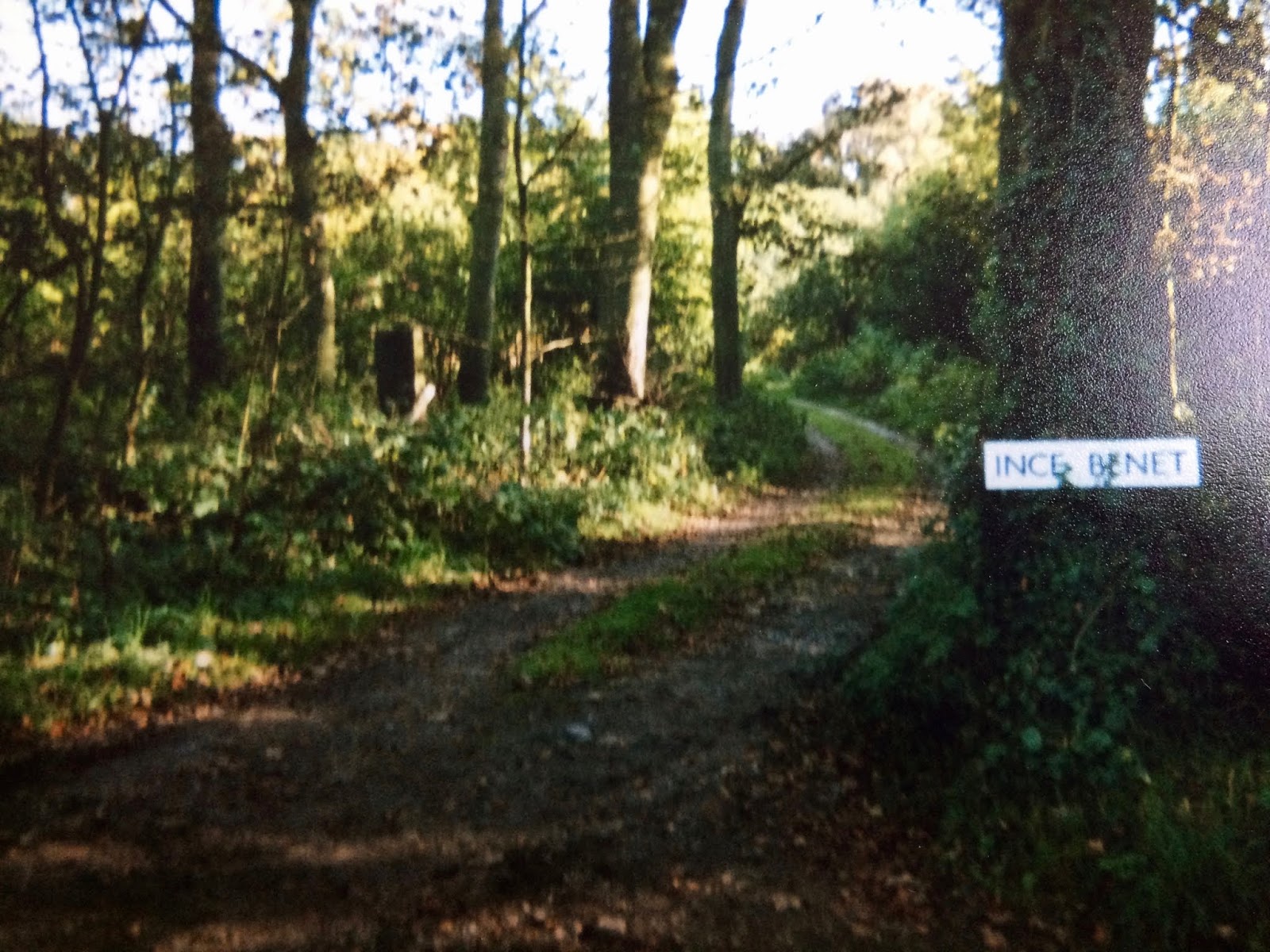
"You should meet Tom Cullinan," she said. "Who's he?" I asked; and she gave me his address, Ince Benet at Ince Blundell on the edge of Liverpool.

I wrote to him and said she'd recommended I look him up. He sent back a typically brief but kind note, suggesting I watch for the kairos. The what? I looked up "kairos"; an interesting word meaning both time and action — like an actor's cue, God's now moment. 

The kairos came a couple of years later when Tom and I were both speakers at Greenbelt (a Christian festival with a slant towards social justice, community, ecology and music). Excited to learn he was there, I went to find him, and rather shyly gave him a copy of the most recent book I'd written (The Long Fall, I think). It was the first time I'd put my books about Benedictine monks into the hands of an actual Benedictine monk. A few months later, a journalist writing an article about my work sought his opinion on it — and he said he was somewhat miffed that I'd managed to get to the heart of the vocation without personally being a Benedictine monastic.

Cheered by this imprimatur, I wrote to him again, asking if I could visit. This was in the days before email, and besides, Tom never had a computer or a telephone. He sent a photo-copy of a neatly handwritten sheet detailing instructions for reaching his place by public transport — a train to Liverpool Lime Street, then a bus out into the country, then a walk through the woods. So I went, and spent a few days with him, utterly captivated by the hospitality and simplicity of his home and his life.

He lived in a wood near Liverpool, where he'd been granted permission to build a house in exchange for managing the woodland. His brother (Ted, an architect, who designed the Maths building at Cambridge university) designed it for him — Tom came of a creative family full of initiative; I gather they had a lighthouse at one point, but when I knew him his mother still lived in Camden, and he used to take his folding bike on the train to visit her. Tom's house was superbly designed, open plan but with clear intentional separation of spaces into nooks that flowed easily from one to the other. It was an A-frame house, the living accommodation mostly upstairs (and there was a highly effective disability lift on a pulley system). 

The idea had been for him to establish a satellite community to Ampleforth Abbey, but the monks who came out with him didn't stay for one reason or another, and it ended up being just Tom. He had this vision for a more earthy and grounded simplicity, close to nature and in perpetual fast from the electronic revolution, that was out of step with the necessary sophistication of Ampleforth, but made an excellent retreat base for them and for the Catholic clergy in general. He kept faith with the Benedictine vision of common life, and in the absence of monastic colleagues a group of like-minded lay people formed in and around his home, helping him with the garden, keeping sheep, saying the office, sharing the Eucharist, being the body of Christ.

I went back several times to stay with Tom, and one occasion in particular remains vividly in my memory. It was while I was training for ministry, writing books, preaching and teaching, involved in a a prison fellowship, working on a voluntary basis as a free-church hospice chaplain, and being the anchor person for our family of five children, all between five and eleven years old. We kept an open house, and all kinds of people stayed or just wandered in to find us. There came a time when I was utterly exhausted, and went to spend a few days in the woods with Tom. I got there, and then collapsed, completely ill and unable to get out of bed for the next couple of days. He left me in peace, and I just rested, feeding my soul on the view of trees from the window. The room was warm and cosy because the stove pipe from his furnace in the workshop below passed through it. A very healing space.

This was the way to Tom's house.


The house was called Ince Benet.


This was the first glimpse of the house as you came through the trees.


It was just lovely.


That chimney you can see rose up from the furnace and heated everything. The window belonged to the room where I stayed when I was ill. Can you see the stove pipe passing up through the inside?

This was the bedroom —


— with its stove pipe —


— and its view of restful trees. 


And sheep.


A storage area with a freezer and rope and bottles of the delicious apple juice Tom and his friends had pressed — 


— separated the room where I stayed from the kitchen —


— which led into the eating area (I have lovely photos of Tom's friends having lunch with him, but these days, you know — data protection etc — I think I can't post them) — but here's Tom, anyway, with a child beside him —


The dining area was separated from the library and reading nook in the window, by the stairwell.


Halfway down the stairs a sloping surface acted as a notice board and display space.

This was the disability lift.


Under the main part of the house, Tom had his book binding room, guest quarters and a chapel —


— where upright chairs alternated with cushions for those of us who prefer to sit on the floor.


The first time I went there, I wanted to make a little memorial devotion for my dearly loved friend Fabian Cowper (another Ampleforth monk who had died some while before), and Tom asked if he could join in, so we did that quietly together in his chapel.

Outside the chapel, the eaves made a walkway along the house with places to sit looking across the big garden with a vegetable patch, a greenhouse and a caravan for guests making a solitary silent retreats.


The vegetables Tom grew were magnificent —


— and the herbs —


Under the kitchen end of the house was the wood store with its furnace —


— where garden implements hung neatly, and the stairs rose to the storage space between the room where I slept and the kitchen —


Outside Tom's bookbinding shop (and his own room) he kept his bike, a Sturmey Archer from the 1940s. He used it to travel out to the village churches to say Mass for them —


He taught me so much, and he inspired me. I remember him saying, "It's a good idea to want what other people don't want", and how right he was!

I loved Tom very much, but he and I saw eye to eye on almost nothing! When the Catholic bishops issued the One Bread One Body edict that put a stop to the gradual relaxing of the exclusion of non-Catholics from the Eucharist, and Tom was under obedience to carrying it out, I stopped going there, though we stayed in touch. I'd send him a Christmas stocking sometimes, with things like rubber bands and paper clips and safety pins and woolly socks, with my love. And I went back once, with my husband Bernard (an artist blacksmith), who had made a crucifix for Tom's chapel. We wrote to each other, and I kept and treasured his letters a long time, but in the end, as part of my own discipline of simplicity, I burned them. I try to keep no earthly ties. But I have kept one of his letters.

The last time Tom wrote to me was back in 2011. I'd sent him a copy of this book —


— with this dedication —


— and he wrote in response.


The next year, I heard from the abbot of Ampleforth that Tom was becoming frail. Peripheral relationships become burdensome as one grows old, and he was in his late seventies by then, so I let it be. Monastic life embraces a discipline of purposefulness, and I had nothing more to say but that he was so dear to me, which he already knew.

When I left Tom's house for the last time —


— I knew I would never go back. But I have kept these photos taken almost thirty years ago, because I never wanted Tom's place to fade from my memory.  

From time to time in these last few years, having in mind that Abbot Cuthbert said Tom was getting frail, I looked on the internet for traces of what he might be doing. Up to 2017, I found indications of him still speaking, still working. There were gaps, of course, because I relied on reports and articles and videos — Tom himself was never online.

And then I looked again today, and saw he died at the end of January. Waymarks of his passing were here and here and here and here.

May he rest in peace and rise in glory. A prophetic and healing spirit of such fire and such humility, he was so dearly loved on this earth.


Now I have uploaded my photos, I'll make a fire of the originals and send the smoke to heaven as my farewell. I am so glad I knew Tom Cullinan, and so grateful for the kind and open space he made.


Monday, 11 March 2019

Foxy

Every evening we feed the foxes, and they know our garden is a safe place to be. In the summertime, often we see a fox curled up asleep on the grass by a log or by the wall. They bring their cubs in the summer.

We sometimes have fed them in supermarket packaging containers (the plastic boxes mushrooms come in, for example. In the waste ground beyond our garden they have a neat stash of these containers in a hollow under the low curving branches of a sheltering tree

We know they play in our garden at night because they leave behind toys they have brought up from the park down the hill from us — a ball, a child's shoe, that sort of thing.

This is what they left on the grass last night.


It smells very strongly of fox.


Thursday, 7 March 2019

Walking past dragons

Now, I bet this happens to you too — unless you go absolutely everywhere in a car.

It's when I'm walking along the street, at specific points like a bridge or a crossing, or where the pavement (sidewalk) narrows, or when the only way is through an aperture like an underpass — that sort of place. Places where strangers must pass each other closely.

Very frequently — and I think, though I haven't double-checked, it's always (or at least usually) men who do this — as the other person coming from the opposite direction passes me, they exhale. Like a dragon. Like a sort of hiss, or the opposite of a gasp. Not loud, but not always especially quiet either.

People do this a lot. Why? Its really weird.


Anxiety


This morning in the bath I interviewed myself, asking myself firmly, "What's going on?"

It helps that I live most of the time in a fantasy world with people I have imagined, which allows the different personas of my interior realm to talk to each other. That makes interviewing myself easier, but today I had to resort to direct questioning.

Earlier in the week our Ellen was sitting chatting with Buzzfloyd and me and the kids in their kitchen, wearing a lovely green kaftan. I immediately wanted to change all my clothes for kaftans. I ferreted out the place online where she got hers, and — oh, dear — the only ones left were in size XS, an act of God that saved me from great expense. Two days before that I'd been looking at dresses on Toast. I wanted three. Happily there is just enough in my bank account to buy groceries, so spending two months' income was not an option and I was saved from that. I did, however, buy a coat on eBay, just in case March turns out to be windy and very, very cold. My gilet served me perfectly well through January, but hey. The coat is very nice: also huge, heavy and bulky. Heavy clothes make me tired. I am fairly sure it is destined for the next Shelter collection (Shelter is our UK homeless charity, and every now and then they drop off bags for us to fill for them to earn income. I try always to have something to donate for them).

Then yesterday, I decided I hated all my trousers and herded them up to get rid of them. I looked at skirts on eBay so I could get some more exactly like the ones I've already got.

Later in the day, I decided I hated my hair and ought to have it cut off. "Whoa, whoa, whoa! Thou hast been growing that since last spring," said the Lord. "Think about it, chum! Press 'Pause'. Are you sure?"

I backed off the hair cut and decided I was too fat. This is why everything is horrible. I have a fat face. My grandmother was fat and I look like her. My mother hated her and hated that she was fat. My mother hated my other grandmother getting fat at the change of life. I grew up in a family that hates and despises fat. I live in a culture that has an perpetual fat war. This is the problem, fat, fat, fat. I ought to throw my food away and buy salad. I interviewed myself about what I am eating. It seemed . . . well, not perfect, but . . . realistic. I eat greens. I mean, I had pancakes on Shrove Tuesday and on Sunday I had afternoon tea with friends, but I don't eat Snickers bars or big slices of coffee cake or waffles with ice cream — sadly.

It was at this point that I turned round and looked at myself fiercely and asked — "What's going on?"

And then I knew.

Let me give you a little background (with profuse hand-wringing anxious apologies for writing such a long post).

From my family of origin, discount my father. He was rarely there. I can remember only one conversation of any length with him from my entire life (because he was giving me a lift to Oxford and so was stuck in the car with me for an hour and a half). Fairly nice man, but basically somewhere else. Completely uninterested in my thoughts on any subject in the world. The separation-by-transcendence from God the Father has never greatly perturbed me because my earthly father wasn't that immanent either.

My mother and sister were there, and my mother and I talked about life, the universe and everything all the time. But my mother and my sister share a common evaluation of me. They regard me with kindly contempt, and reject my views on . . . everything. I won't expand on this one too much, it's a big subject for me, let's just leave it there. 

At school I had difficulty, because I couldn't learn anything. Back in the 1960s IQ tests were a big thing, and we did them a lot at school. My IQ went off the chart in the end so they could no longer measure it. I don't even know what that means (How could it go off the chart? Anyway, that's what they said), but I do know that if I take an IQ test these days I can hardly do it at all, so I think it was just practice not intelligence. The thing is, my mind retains ideas but not data. I scored a steady 10% in maths and less in geography. I failed history O-level (that's the exams we took around age 16). I got in a muddle with the sewing machines and didn't know what the art teacher meant about painting the different shades within the pile of white things and stole some eggs in the cookery lesson because I messed up the meringue and had to start again. I was thrown out of the dance class for messing up Strip The Willow. I was okay at English, but got only 50% in the mock O-level exams because the teacher didn't like my creative writing (she thought it was going to be a love story but it turned out to be about God) so she gave me marks for spelling and punctuation (perfect) but none for content whatever. School and I were unsuccessful travelling companions. When I did well in my French A-level (the exams we took at 17/18) the teacher wouldn't speak to me because she'd predicted I'd fail. Anyway, eventually they released me into the wild and life got better.

I've never been much good at jobs because I get bored and tired, but I'm quite resourceful, don't need much money and am fairly good at living. I'm not trainable, really, at anything. When I was a free-church hospice chaplain I asked if I needed training and they said no because I could already do it without. When my life was screwed up to the max in the early 2000s, the church told me to get counselling but my doctor said it couldn't be done — I wasn't counsellable, don't bother. I think she was right; she's a good doctor.

When I trained for ordination, it was terrifying. I seemed to live in a completely different galaxy from . . . everyone. For one thing, I believe in the unseen world. I believe in the resurrection and the virgin birth of Christ. I also believe in angels. And I believe in fairies. I also talk to animals and birds and trees and they talk back to me. I walk on the rim between life and death where it is very luminous. I am only just here, and I am waiting to go home, and I dearly hope they still want me when I get back there. None of this had any place in ordination training. Each course we did made absolutely no sense to me, and I never knew what to put in the essays because they might as well have been talking Japanese. I have no idea how I got through. Kindness, I guess (theirs).

So, back to the present.

I am about a week off finishing the book I am writing and now I am crippled with anxiety. I have what my husband (a kind man; people are always kind to me — they have to be) calls "an original mind", which is all very well but does tend to mean my honest truth is other people's rubbish (viz. my mother and sister). Plus, I have no idea how to write. No one ever taught me, and couldn't have done if they tried. If people try to teach me anything I'm just mesmerised by the person teaching and can't pay attention to what they're telling me at all. So when it comes to writing I just dig around inside and put down what I find. A situation similar to when our Fiona was about four and voiced concern about how she would make a living once she grew up. We were at the time driving past the sweet shop (a favourite venue of hers) so I said, encouragingly, "Oh, you'll find something interesting to do, darling. Perhaps you'll run a sweet shop." There followed a split second's silence then her wail of anguish, "I CAN'T RUN A SWEET SHOP!" 
"No, no," I hastened to reassure her: "Not now. But when you're grown up you'll be able to do all sorts of things." I can't decide whether I was mistaken or simply lying, but I feel the same about writing books, which is the only thing I can do, as she did at four years old about running a sweet shop. I marvel at those people who know about plot structure and whatnot and can tell you about . . . er . . . whatever it is you're meant to know to write a book. So I have put in my manuscript what I think and believe, but . . . if it seems pointless, opaque and childish, I have nothing else to say. Fortunately, this is the month for royalty payments and I have just enough coming in that if my editor thinks what I have written is inadequate tosh, I can give him back the money they paid me on signature of contract and call it quits.

But when I interviewed myself this morning, my inner primitive finally confessed, that's the problem: not trousers, not kaftans, not skirts, not hair and not fat. It's the sense of profound inadequacy that makes the very idea of writing a book seem utterly laughable. Every.  Single.  Time.

Whatever your problems in life may be this morning, dearest reader, be glad of this: at least you are not me. Life is sooooo long.


Tuesday, 5 March 2019

I love this one!

They know how to do it in Australia!

Electronic moment

O, the sense of power and achievement when you conquer an electronic thing! 

I just managed to discover how to get Stickies on my desktop again — I haven't had them since I went from a PC to a Mac years ago. I didn't realise they were there hiding in a Stickies database in my Library folder all this time.

And now I've got them back again, along with that accompanying sense of supreme contentment that goes with victory over electronic bafflement.

Do you know what I mean (about Stickies)? Look —


That's my desktop, with my WIP folder and my folder of general stuff, and now also the vital facility of Stickies with which I am reunited, so I can not only make myself a note not to forget something but actually put it where I cannot help seeing it and therefore will actually remember it — not just re-discover it two months later when it's too late.

Saturday, 2 March 2019

Hebe's chant on perception

Every now and then I put this up here again because it never grows old. I ought to see if I can persuade Hebe to actually sing it for you, because she wrote a tune for it too.

Seeing yourself – a chant on perception

When you see your face in the mirror,
Don’t be dissatisfied with what you see.
For your face is only one part of you.
There are parts of you that you cannot see.
There are parts of you that you will never know;
You cannot know how beautiful you are to others.

There is also a part of you
That others can never know;
The part of you that is only for you to see,
And it is beautiful in its mystery.

I believe there is a God,
And he knows all of you and me.
He knows the things that I cannot know –
The parts that only you can see.

But he also knows what I know,
And the parts you can never see,
God can see the whole of us –
Even that which is a mystery.

When you look at your face and your body,
Don’t be dissatisfied with what you see;
For beauty is not only in that which is visible,
But also in parts that are not seen.

And do not think that any part of you is ugly,
Even the inside part of you:
For part of the beauty that is you
Is when every part of you is together.

A body is far more beautiful alive than when it is dead;
But, when all is said and done,
We cannot know how beautiful we are
’Til we see what God sees.

And do not be afraid when you are changing –
Your face or the inside of you;
For that’s what it is to be alive.

If you ever feel misunderstood,
Ugly, or even invisible,
Know that, because I have seen you and known a part of you,
There is a part of you that is a part of me.

Can you see that we are a part of each other, then?
So what you see in the mirror is not all of you:
Don’t be trapped by feelings of inadequacy;
Let it be a mystery, and let it set you free.

So do not be unhappy with your body –
Love it, for it is part of your wholeness;
And if you cannot do that,
Love it because it is part of mine.


(Words of chant © Hebe Wilcock 2006)

Friday, 1 March 2019

Paying attention

On Fridays, we go to see my mother. Tony gets her groceries while she and I sit and chat. She's 91, and I'm watching her gradually drift out to sea. Today I manage to negotiate the difficult territory of securing her agreement to dispose of her dying houseplants (I'd brought her some silk ones instead) and associated cache-pots, and some of the accumulation of storage tins from the kitchen. We haul off a big bagful of junk. More next time . . .

She likes the new artificial flowers.
"What are those? Are those snowdrops? I love snowdrops! They're my favourite!"

While I'm in her kitchen making her a cup of tea, she calls me: "Am I talking rubbish?"

"No," I say. "What about?"

"Well, is there a cardiologist on the North York Moors?"

This last week she's called her carer at three in the morning and had the ambulance out in the small hours only to send them away when they arrived. She remembers very little from moment to moment, so I talk with her about places she's known and animals we had — the dogs, the sheep — which delight her when they're recalled to mind. And I talk to her about the farm where she grew up and go over all the family stories so she can find herself again. She's frail and very thin, and losing track: "What am I supposed to be doing? How old am I? When is Kerry coming?"

When someone in such circumstances asks me if there really is a cardiologist on the North York Moors, I listen intently. As people draw near to death they begin to drift from their moorings and often language becomes symbolic. She has a longstanding heart condition and is increasingly breathless — and the North York Moors are the heights above home.

Sometimes in her dreams, she tells me, she has a companion — a dog called Lou — who takes care of her as they go walking. Sometimes they revisit places that have been home, and sometimes they go walking on the North York Moors.

"I don't think that's a dream," I tell her as she describes the dog and how faithfully it goes with her: "I think you've been astral travelling. I think your soul's getting a bit loose in its socket. You're getting multi-dimensional. You've been star-walking."

She gazes at me, bewildered, asks me in puzzlement: "What? Is that a fact?"

"It's an opinion," I tell her. "I might be wrong, so I can't say it's a fact. It's just what I think."

And today I ask her to tell me more about the cardiologist on the North York Moors. "Is this someone you've been to see, or someone you're going to see?"

"I think I've been to see him," she says. 

"Oh. What did he say? Was he pleased with how you are, or was he worried?"

She tells me another family member accompanied her on this visit. "He kept talking to her and not to me — talking over my head," she says. "In the end, I said to him, I am the patient."

"And did he listen then?" I ask.

"Yes," she says. "He did."

So I tell her about my friend Rosie, a nurse who lived and worked in Hastings but came from the Caribbean. Everyone loved Rosie, she was a darling. When she had cancer and was in the hospital I went to see her. Her room smelt delicious — she had some Caribbean colleagues who'd been bringing in home cooking! While I was there, a consultant came on a ward round, sweeping in with an entourage of students and graciously bestowing on Rosie the benefit of his patronising manner. He looked at her notes, and frowned over the oncology report. "I believe your oncologist is on holiday," he said. "Did he give you his opinion on this before he went?"
And Rosie said (or this is what we heard), "Huh!"
The consultant looked distinctly put out.
"I beg your pardon?" he said.
And Rosie said again (at least this is what we heard), "Huh!"
The students shuffled a little and looked at each other nervously. Seeing clarification was needed, Rosie explained in her lovely Caribbean accent: "Not 'his' — huh — Dr XXX is a lady."
Everyone visibly relaxed and the tension left the room like air let out of a tyre.

"It was funny," I explain to my mother. She laughs. She thinks so too. 

It's always important to listen, and to notice what's happening. To understand where someone is coming from — and maybe to realise when someone is setting out for the peace of the North York Moors, that wild and open space of larks and curlews where the soul can at last be free.