Wednesday, 17 March 2021

730 things — Day 6 of 365

 In sorting out my surplus belongings and noting the emotional silt that stirs up in the pond of my being, I realise that I am operating under two quite separate belief systems that don't harmonise with each other whatsoever. One has developed from my own thinking and the other I inherited.

My own belief system says that life is flow — death is static (that's a Taoist principle). I believe in the provision of grace, and in sharing and de-monetising and keeping the goods and benefits of this life moving so everyone gets a turn. I believe our mistakes are the way we learn and grow. I believe that amounts of money are only numbers and don't matter very much. As a consequence, I have developed an easy-come-easy-go approach to belongings, seeing payments for possessions more as rental than purchase. I pay to wear this for a while, and when it no longer feels right I pass it on — preferably still in tip-top condition so someone else can be pleased to have it, or else so worn out it must be thrown away.

But then I see that I have a quite different belief system open and running, that came from my mother and has been reinforced by the church and by various mentors and associates: that frugality is a most prized virtue, that one should get a purchase right and hang onto it forever, that one should be stable in every respect so that clothes go on fitting and last and last and last. 

The result of this is that my practice, of acquiring and chucking so at any given time I travel light but a lot of stuff passes through my life, is a result of my developed belief system but arouses deep shame in me because of the one I inherited. 

I have no conclusions in terms of life lessons to draw from this. I just notice it and think, "Oh, right. What to do about that, then? No idea."

And today I am moving on a floral t-shirt and a pair of blue trousers. Why? Because the blue is too insistent for me and annoys my eye every time I wear them, and the t-shirt has a little placket with buttons that weight it so it sags on my habitually concave chest (round-shouldered — a chronic huncher and stooper).

What am I like. Oh, dear. Never mind. Off they go.


I am learning more from this process than I either expected or wanted.

Tuesday, 16 March 2021

730 things — Day 5 of 365

 It's a very salutary process for me, culling my belongings yet again. On the plus side, going through them carefully and acknowledging mistakes is helping me know myself better. On the minus side, I am seeing patterns of seriously stupid and wasteful choices I make. 

I'm also noticing that the huge bundles of clothing I acquire and dispose of relates to bewilderment as my body changes. This has a lot to do with getting older. Fat accumulates in different places, posture changes, poor habits settle into manifestation as illness creating pain and tiredness. So as one thing changes I find myself reverting to styles and fabrics that worked fine once upon a time, only to discover they no longer do. 

Jeans, for example. Since I was about 14 years old, getting into a pair of jeans after a slimming diet has been a recurring cause for rejoicing. I have five children and am now well past menopause, and my favourite foods in the whole world are carbohydrate based — with the result that I am no stranger to hormonal roller-coasters and weight battles. 

I remember when my second husband Bernard was dying, in the last weeks of his life, it had been such a draining and exhausting time balancing his end-of-life care with pastoring a group of churches. I'd lost loads of weight. Bernard was a very thin man, and like many thin people he had a certain contempt for those who put on weight (which I had in preceding months as we'd eaten stuff designed to combat the alarming weight loss of his disease). So I said to him at one point, with pride and delight, how much weight I'd lost. With typical ferocity he scowled at me, saying, "Well don't go and put it all back on again, then!" But of course I did.

In the last couple of years as I've struggled with all the ailments that are the hidden gift of carbohydrate and the insulin problems it brings, I've stuck to diets that made me feel well, then obtained a false optimism that fooled me into thinking I was fine and could eat anything now, and so on and on in an up-and-down struggle to be well.

And at some point in all this I got to a place where I'd stuck carefully for a long time to food that inflames nothing, as a by-product of which I'd got quite a bit thinner, and was suddenly delighted to realise I could now fit into sensible-sized jeans again. This is where I went wrong. In a fit of rejoicing I bought not one pair but several. Everything was fine for a little while until I realised that at the age I am now and with the health issues I've had, my lower legs can no longer cope with the restriction of close fitting denim reinforced with elastane. It set off things I'd quieted. I saw I'd made another colossal mistake. I don't know about you, but I find facing such mistakes very difficult. Especially it is difficult in a marriage and a household, because I find I don't what anyone to see or know how much I wasted — again.

So here I am one more time getting rid of an embarrassing and shameful accumulation of jeans. Oh, dear. I hope I remember this time, and don't do it again. I suppose I'm getting old enough now that in the nature of things there surely cannot be too many more goes round this particular carousel. I hope that's so.

Being the case, let's move on two pairs of perfectly good jeans today. Here they are.


Monday, 15 March 2021

730 things — Day 4 of 365

 When I began this, my only thought was of taking a painless and leisurely route to culling my accumulated bits and pieces, sorting through what I have as part of the regular discipline of maintaining orderly peace and travelling light. But it occurred to me this morning that an additional benefit of it is the casual creation of a calendar to observe the days going by as we travel through the long house arrest of this transitional year. We've sat indoors dodging the ominous spectre of the virus, grateful for faithful and efficient delivery drivers, getting our first vaccine jabs as soon as our turn came, watching the seasons change and our hair grow. It's nice to think that once these 365 days of getting rid of 730 things is done, we will all have emerged. Churches will be open again and cafés, it will be safe to go on the bus and the train, friends will be able to visit for a cup of tea and a chat. Brexit has happened in the meantime, of course; and though thankfully Joe Biden and Kamala Harris prevailed in America, there's still turbulence on the political scene there, and we in the UK still have an irresponsible government with senior members who treat public funds as a private resource. And there's the maverick prince and his wife. Jeepers. So much going on quite apart from the social and economic impact of the virus itself and the deeper entrenchment of climate change. It's not entirely wise to wish time away — heaven knows what will be at the other end of any one winding passage of time. But still — even so — 365 days . . . let's be hopeful.

Well, today I am disposing of two very nice items of clothing — they'd go well together actually — a top and a skirt.

The top is a regular style from a firm called Cotswold Collection; really nice quality, well made. 


The thing is I buy virtually all my clothes either second-hand on eBay or in drastic sale reductions. This particular top was in the former category. On the Cotswold Collection site these retail at £45, and this one was £5.99. I have one in the same style in an oyster colour, that fits and suits me perfectly, bought for a similar price. I hoped this one would be a slightly more red-burgundy shade (as it looks in my photo here and likewise the vendor's photos on eBay), but it's that dusty purple colour in reality. I can't explain it but the redder tint looks very nice on me where the plum purple makes me look as if I might have a heart condition. I am already mauve enough without augmentation. I don't know if the vendor accepts returns, but especially in the days of the virus I think it in any case inadvisable to have more transit of goods between private homes than strictly necessary — I don't want my eBay dithering to make me an unwitting super-spreader. Besides, the things I buy are so cheap that by the time I've paid (non-refundable) postage here, and then postage back again, what I recoup would hardly buy a cup of coffee. So I keep my mistakes in carefully folded condition and donate them to raise funds for homeless people. I reckon that way they are not wasted, people get a roof over their heads, the volunteer sector is supported, and the many economically challenged people who plentifully populate the town where I live have the opportunity to buy nice clothes in excellent condition. So I've packed up the top and skirt ready for when the Shelter shop opens up again in a few weeks time.

The skirt — another second-hand eBay purchase at rock-bottom price — is by the company Lucia, again a really nice firm. 


It is a style that needs to fit snugly around the hips, and boy, does this fit snugly!! So very snugly as to make me look as if I have a pot belly, which I resent, and to somewhat compress my internal organs which I resent even more. Over the years, vanity sizing has become the way of women's fashion, and what I think has happened (judging by the style, which has not been in vogue for some while) is that this skirt was originally made and purchased a very long time ago and just hung in some dear lady's wardrobe until she died and her things were cleared out. So it may once have been the size it says it is, but we all mean something much more generous when we look for that size in 2021. Never mind. It's a pretty skirt with a lovely flow in a beautiful and subtle colour; it will suit a slimmer woman very well.

So that was Day 4. 


Sunday, 14 March 2021

730 things — Day 3 of 365

 Today I am moving on two things that I thought I'd love and cherish for ever.

One is an Apple stand for my i-phone, pleasingly minimalist and with a hole at the back for a charging cable.


I thought this would be so useful, and it sort of is. But the slant of it means that if I use it for making videos you get the nostrilly staring-down-a-deep-hole effect that I hate. And I don't really need it for anything else — I can just put the phone down in the normal way. So, to my surprise, I'm entirely happy to let it go.

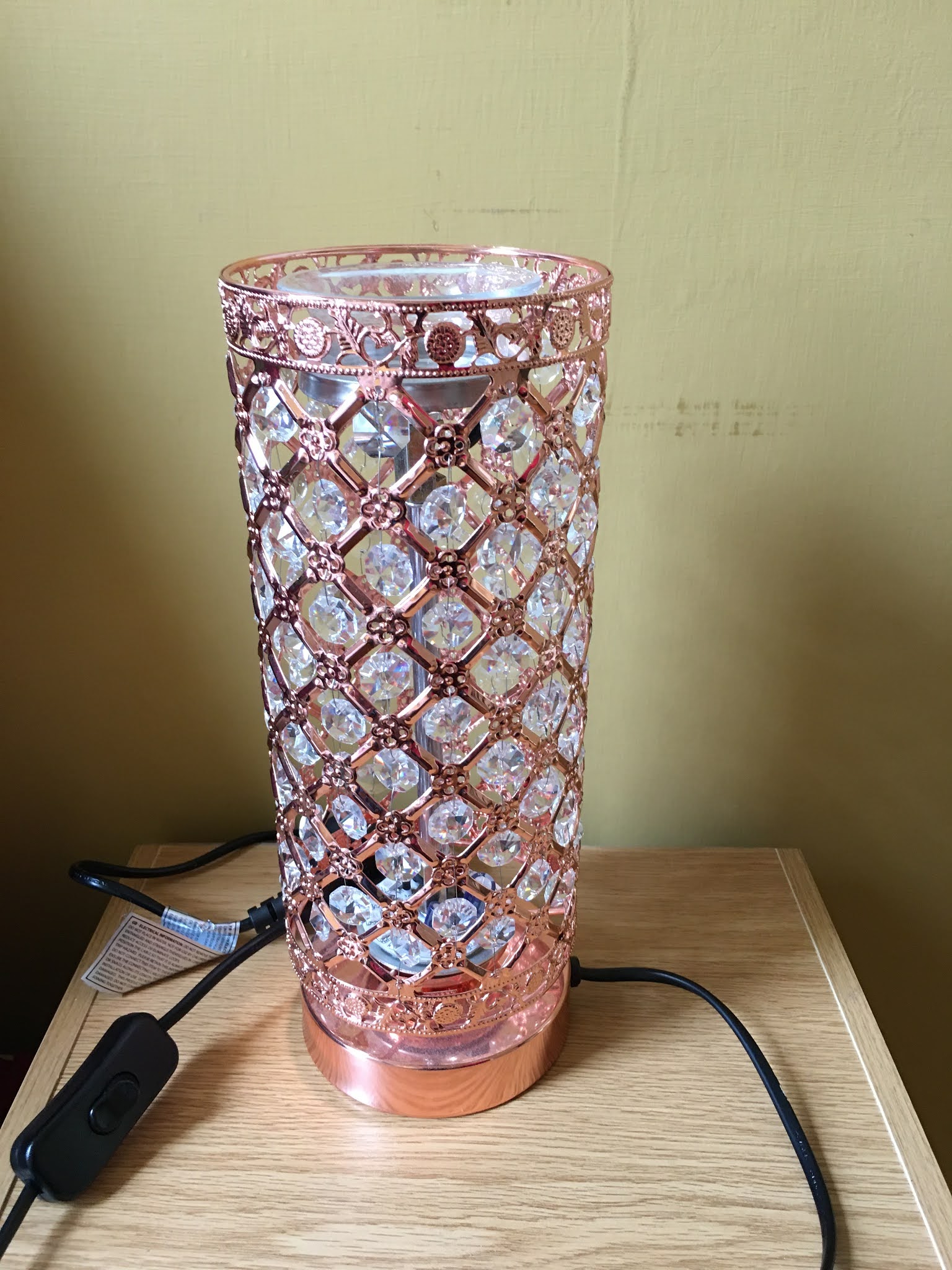
The second thing is a lamp with a little dish at the top for water with aromatherapy oils. The lamp does changing colours sparkling through the little acrylic crystals. When I saw it in the shop I just had to have it. I loved it, and I still do, but I also have two other lamps in my room, and somehow enough is enough. It feels like a delicious meal that I've enjoyed but finished now, if you see what I mean.


Both these will go to the charity shop to raise some money for homeless people.

TAKING REFUGE — ministry of the word from The Campfire Church today


The concept of taking refuge can be seen in all spiritual paths, but we are indebted to the Buddhist tradition for the specific phrase. In their practice they take refuge in the Buddha, the dharma and the sangha — which can be otherwise expressed as taking refuge in personal holiness, in the wisdom body of teaching within one’s tradition, and in the supportive company of fellow travellers.


Human being is inherently vulnerable, and it’s universally true that we do take refuge in something — unconsciously if not deliberately. 


It’s important for our wellbeing and spiritual stability that we clearly understand this — whatever we take refuge in will also take refuge in us.


In Buddhist practice it might work like this. You take refuge in the Buddha — immersing yourself in the enlightenment you see in his wise teaching and example; and in due course you find the Buddha has taken refuge in you, you too attain the enlightenment of your inherent buddha-nature. You take refuge in the dharma (your tradition’s wisdom body) and as a result the wisdom takes refuge in you; trained and disciplined by it, you in turn become wise. You take refuge in the sangha (the faith community) and you in your turn become part of its goodness in the world, strengthening its witness and offering support to your fellow pilgrims. That’s how taking refuge works at its best.


But even if we’ve never heard of the concept of taking refuge and have never intentionally practiced it, the principle is still operative in our lives. The habit of taking refuge is natural to us; and it is always true that anything in which we habitually take refuge will also take refuge in us. Let’s take a moment to unpack what that might mean.


The instinct to take refuge often appears in relation to adversity.

When we are tired or stressed or upset. When we are afraid. When someone has been thoughtless or hurt us. How do we reflexively respond? Where do we turn? What do we do? 


If, when I am stressed or wounded, I take refuge in grumbling and complaining, grumbling and complaining will take refuge in me — it’ll become a habit. A very tedious and unattractive one actually, a bit like a bad smell.


A great many people who are stressed and exhausted, take refuge in snacks and cookies. Gradually, over time, sure enough, we see that snacks and cookies have taken refuge in them.


Some people, living with the fear and insecurity of our uncertain times, take refuge in conspiracy theories. And these settle in and take root; conspiracy theories take refuge in them. Trust evaporates.


Many people, under the experience of marginalisation and disappointment, betrayal perhaps, take refuge in anger. We see them on the news — the ugly masks of faces shouting with rage in the faces of those they oppose: anger has taken refuge in them.

As Friedrich Nietzsche said, “Beware that, when fighting monsters, you yourself do not become a monster... for when you gaze long into the abyss, the abyss gazes also into you.”


But if, when we are stressed and exhausted, so far as we have opportunity, we take refuge in rest, then rest will take refuge in us.


If, in this busy and frantic world, we take refuge in deliberately slowing down, then slowness will take refuge in us. We will become signs of contradiction in a world of rush and tear.


If, when we are perplexed and feel threatened, we take refuge in solitude, reading a good book with a positive outlook, taking up our knitting and listening to some uplifting music, then the calm of these hours alone will take refuge in us.


If, in the challenge of this bumpy ride through uncertain times, we take refuge in order and simplicity, tidying and cleaning our homes, reducing our possessions, then order and simplicity will take refuge in us, restoring us to peace.


And as the British Royal Family has ably demonstrated in the restraint and dignity of their responses to recent scandal and gossip, if over the course of your life you take refuge in the dignity of discipline, then the dignity of discipline will take refuge in you.


The humble and vulnerable priest Brennan Manning well knew what it was to take wrong turnings in forming habits of taking refuge. He took refuge in alcohol and became deeply addicted to it. He never shook off his alcoholism and died of it in the end. But along the way, with much struggle, determination and surrender to grace, he also learned some splendid refuge habits. In particular, he gave us two prayers — one just his own and one from the psalms of King David who had plenty to seek refuge from in the course of his life.


One of Brennan Manning’s prayers, very simple, is: “Abba, I belong to you.”

When we are disappointed in ourselves. When life is too much for us. When we are tempted to snap and snarl. When we want to say something cruel. When we feel like complaining. When we have been let down or rejected. Remember that prayer. It is a refuge. Write it on a scrap of paper and keep it to hand. “Abba, I belong to you.” The God in whom you take refuge also takes refuge in you. His presence brings peace.


The other prayer, from the psalms, is: 

“When I am most afraid, I put my trust in you.”

Instead of the conspiracy theory that corrodes trust. Instead of the defensiveness that divides us from each other. Instead of going on the attack when we feel threatened. “When I am most afraid, I put my trust in you.” 

As we take refuge in trust, so trust will take refuge in us, and we will become like Jesus, who trusted even Judas — not because of what Judas was (which Jesus knew perfectly well) but because of what Jesus was.


The Hawaiian Ho’oponopono prayer that we’ve looked at before in the Campfire Church, also makes a very good refuge prayer:

I love you

I’m sorry

Please forgive me

Thank you


If we whisper it quietly inside whenever we are confronted with human sin in others or in ourselves, we make it a refuge into which we can creep; and over time its wisdom and compassion takes refuge in us. There’s a cumulative force to repeated practice — what Thich Nhat Hanh calls Habit Energy, that establishes into something very solid and dependable.


And of course, we have the great blessing in the Christian church of that curious tradition arising from the imagination of our mystics, of taking refuge in the heart and wounded side of Jesus. When we are wounded and spent, we creep into his wounds and make them our refuge. If we take refuge in Jesus, then Jesus will take refuge in us.


That is why the statues of the sacred heart of Jesus are so beloved to the Catholic Church; it is a refuge that will never fail.  


Abba, I belong to you.


When I am most afraid, I put my trust in you.


I love you
I’m sorry

Please forgive me

Thank you


Let me evermore abide in Thy heart and wounded side.

Saturday, 13 March 2021

730 Things Day 2 of 365

 Today I moved on this box of seeds and seed potatoes. The seed potatoes are already sprouting!


I got them with the intention of growing vegetables from seed, but some things have changed since then. The little patch where we grew veggies last year is in a sunny, sheltered — and, crucially, private —part of our garden, just outside the door from our sitting room.

When it was in use for veggie-growing, it was no good for anything else. In fact it became quite difficult even to walk round it because the veggie plants grew so huge and luxuriant in our good compost. Then the bean arch with all the beans on it blew down in a summer storm, the arch mangled beyond repair so we lost those.

So in the autumn I planted up the patch with lawn mint and lawn camomile and a couple of other ground creeping plants, and this year we'll have it as a place to sit, and maybe bring our Whitstable bucket there for a summer barbecue. In case you don't know, this is a Whitstable bucket:


Jolly useful.

We do like our garden to be productive, so we have grown fruit trees in it — plums and apples, pears and greengages and sloes — and herbs for cooking and tisanes, also soft fruit. 

We will still grow veggies, but it makes life simpler to buy just a couple of courgette (zucchini) plants and four bean plants from the shop round the corner when they have them, in May or June. Honestly that gives us all we need, and we eat very few potatoes anyway these days.

So the box of seeds and seed potatoes is today's thing to go.

It is one category, but it does have several items — 11 in all — 2 bags of seed potatoes, 3 packets of kale seeds, 2 of runner bean seeds, 2 of tomato seeds and 2 of courgette seeds.

So that's going to count for today's 2 items, but also as a swap for the 2 pudding basins, 4 bras, 1 book and 2 pairs of earrings that are on their way to me in the post. Obviously a pudding basin is bigger than a packet of seeds, but size doesn't matter. Sometimes I might buy a small item but swap out out a big item. Some of the things I move on will be big and some will be titchy.

The sharp and discerning eye will have seen that a pair of earrings is, strictly, 2 items. So I have 10 items on their way in.

That means today 12 items have to leave my life — today's 2 of 730 plus 10 in exchange for the 10 coming in; and the box of seeds is only 11 items.

So I am also moving on this very nice cardigan (black with an attached cream scarfy bit that you tie at the front). I've put it in a bag and added it to the pile ready for the charity shop.


Some of what goes I'll be bagging up ready for when the charity shops can re-open, other things can be Freegled. The box of seeds and seed potatoes is being Freegled. In our household, Tony is chief Freegler, partly because he actually answers the phone and partly because the site has started glitching for me. So he's posted the seed box today. 

Yesterday, before I started this, Tony kindly Freegled a chair for me — I wish I'd already thought of the 730 Things idea then! A chair would have been a very pleasing item to add to the ballast going overboard. Well, never mind. Upward and onward.

Day 2. Done.

Friday, 12 March 2021

730 things

It's 2021.

In 2012 I had what I called a 365 year — every day throughout that year I disposed of at least one item, so I could be sure by the end of the year I had upwards of 365 fewer possessions. 

That went well.

Over time, my stash of belongings has crept up. I am blessed to live in a very small room, which helps me to notice clutter before I am overwhelmed — there just isn't enough space to accumulate too much stuff. But it's surprising how many bits and pieces have crept in even so.

Therefore I thought I'd have a 730 year (that's 365 x 2), as a gentle way of winnowing my unintended harvest.

Today is March 12th. So every day until March 11th 2022, two things will leave my life. If I buy anything new, I'll also send away another item, to make sure the total shrinks rather than growing by stealth.

I've had an unopened jar of honey in my room for a very long time. Today I took it to its new owner. I have three lamps in my room. Three! So I have chosen one to go to the charity shop, and put it ready for when they re-open. 

A good beginning. 2 down, 728 to go.

It seems a lot, doesn't it? But I have so many odds and ends. Little stashes of Very Useful buttons and bits of cloth. An opened packet of i-phone screen protectors. Two people (I promise you this is true) have given me packets of ash from their fires, and I still have them. When I was showing kiddies how to make altars, I felt so pleased with a few of the accoutrements I made that I kept them. 

Oh, yes. I must easily have 730 casually accumulated belongings. Even now, when I tune in, I can sense them stirring and muttering. 

I think they know.


Sunday, 7 March 2021

"The Misleading Metaphor" — The Campfire Church ministry of the word for today — Tony Collins


In 1895 the French polymath Gustav Le Bon published an influential book called La Psychologie des Foules, translated in English as The Crowd: A study of the popular mind.
As a young man Le Bon joined the French Army as a doctor at the outbreak of the Franco-Prussian war. His experience of defeat, and his first-hand observation of the Paris Commune in the early months of 1871, heavily coloured Le Bon’s world view. He became deeply conservative, suspicious of democracy and social-ism. In his book Le Bon developed the view that crowds are not the sum of their individual parts, arguing that within crowds there forms a new psychological entity which overrides individual decency and common sense.
His book was read by, amongst others, Churchill, Roosevelt, Freud, Lenin, Sta-lin, Mussolini and Hitler. All of them were won over by the view that crowds behave as one unit, irrationally. Le Bon argues that people respond to crisis with panic and violence.
At the outbreak of the Second World War Churchill and his generals were consumed with worry that if the Germans bombed London – which Churchill described as ‘a valuable fat cow tied up to attract the beasts of prey’ – then the city would swiftly descend into pandemonium. They feared the army would not be able to fight the enemy because it would be occupied dealing with hysterical masses.
Hitler, who had read the same book, agreed. On 19th October 1939 he told his generals to expect great things from the planned strikes by the Luftwaffe, which would attack the British will to resist. The plan was put into effect, and on 7th September 1940 348 German bomber planes crossed the Channel. What followed became known as The Blitz, which lasted nine months, and during which more than 80,000 bombs would be dropped on London. Over 40,000 people, mostly civilians, lost their lives.
Did panic, hysteria and brutish behaviour ensue? Not a bit of it. The British responded with humour and resourcefulness, a fine display of the stiff upper lip, exemplified by merchants putting up signs outside their wrecked premises saying MORE OPEN THAN USUAL and OUR WINDOWS ARE GONE BUT OUR SPIRITS ARE EXCELLENT: COME IN AND TRY THEM. The British endured the German bombs as they would a delayed train: irritating but tolerable. There was sadness, grief and fury, of course, but the psychiatric wards remained empty and alcoholism actually decreased. In later years the British would look back nostalgically on the days of the Blitz spirit, when everyone pulled together.
This is all true, but it is misleading, because exactly the same happened in Germany a few years later. Ignoring the evidence of the people’s response to the raids on London, Churchill endorsed a plan to break the will of the German people by carpet bombing Dresden and other industrial centres. A prolonged attack ensued, culminating in the late spring of 1945. RAF bombers almost obliterated more than half of Germany’s towns and cities. On one night in Dresden more people died than had been killed in London during the whole of the war.
Again, there was no hysteria. Neighbours became wonderfully helpful. Members of the Hitler Youth rushed around putting out fires and tending to the homeless. Research later showed, just as in London, that the bombing had had very little impact, not even on productivity: indeed the reverse, as towns which had been attacked increased their contribution to the war effort.
This vast miscalculation by both sides was based on a false understanding about human nature. Hitler and Churchill alike had fallen into the same trap, believing that our state of civilisation is no more than skin deep, that our capacity for kindness and decency is no more than a veneer over the savage beast within.
Military doctrine does not evolve very quickly: the same vastly expensive, destructive but ultimately futile exercise was repeated by America during the Vietnam War.
I am indebted for this story, and for my theme today, to a new book, Humankind, by the Dutch journalist Rutger Bregman. In it he puts forward the revolutionary view that most people are pretty decent. On the whole they look out for one an-other; they act altruistically; they do not automatically follow the crowd.
Examples of non-hysteria don’t make the news, but they are not hard to find. During the attack on the Twin Towers, thousands descended the stairs calmly, making way for firefighters and the injured. In New Orleans, in the aftermath of Hurricane Katrina – when official rescue efforts were seriously hampered by breathless reports of rising anarchy, rape and murder – subsequent investigations revealed that a veritable Armada of small boats sailed in to offer help, from as far away as Texas; that hundreds of civilians formed rescue squads; and that while there was indeed looting, sometimes for good pragmatic reasons, and sometimes involving the police, there was not one confirmed case of rape or murder.
Somewhere, deep in our psyche, is the tendency to believe bad news. We can perhaps attribute it to the fact that over the millennia of our evolution a warning of approaching dangerous beasts was best taken seriously, even if it proved false.
The result, today, is that if we are asked to assess whether things are staying the same, getting better or getting worse, then we consistently say things are going to the dogs. Major surveys have demonstrated this. News is always about the ex-ceptional, and especially about what is going wrong. As a result, you have never seen a headline saying NUMBER OF PEOPLE LIVING IN EXTREME POVERTY FALLS BY 137,000 SINCE YESTERDAY, even though this could have been accurately reported every single day for the last 25 years.
You will need to read Bregman’s book, which I warmly recommend, to follow his arguments and his fascinating illustrations. But his underlying thesis, that civilisation is not a veneer, but operates deep within our natures, is one I find convincing from personal observation.
This misleading metaphor, the idea of the veneer of civilised behaviour masking the savage beast, can be discovered all over our media. Take the hugely popular BBC Two police series Line of Duty, which was ranked in a Radio Times polls as the third best crime drama of all time. It concerns the Anti-Corruption unit AC-12, which exposes corruption in the force. On the face of it, for such units to ex-ist is an indication of a strong moral sense at the heart of the police service. But, of course, AC-12 is itself corrupt, and viewers are taught to be skeptical about every officer’s testimony.
It’s gripping stuff, but is it true? A couple of years ago I edited Leroy Logan’s account of his life as a black cop, published last year under the title Closing Ranks. In it he tells how he battled racial discrimination to rise through the ranks. He encountered prejudice, but he persevered, and became one of the founding members of the Black Police Association. He would become one of the police re-sponsible for organising security at the London Olympics. What sticks in my mind, however, was the response of one of the choir members in the choir to which Grace and I belong. This chap had been a working cop all his life. I told him about Leroy’s book, and to my surprise the normally affable gentleman went red in the face and started shouting about the Black Police Association – not because he was opposed to black coppers, but because the Association by its existence called into question the integrity of the force to which he had given his life. He is a deeply decent man, and it offended him to his core that such a body might be thought necessary.
I wonder what your experience of the cops has been, law-abiding people that you are? Pen and I compared notes the other day, and agreed that every policeman or policewoman we had met, in a combined life span of more than 130 years, was a thoroughly decent human being: responsible, kind, longsuffering, helpful.
The idea, however, that the human race is fundamentally depraved is deeply rooted in the Western intellectual tradition and in Christian theology. St Augustine claimed, ‘No one is free from sin, not even an infant whose span of earthly life is but a single day.’ The concept of original sin was a foundation stone for John Calvin, over a thousand years later, who observed, ‘Our nature is not only destitute and empty of good, but so fertile and fruitful of every evil that it cannot be idle.’ It was Calvin who defined the doctrine of Total Depravity, by which he meant that there was no aspect of the human condition that had not been touched by sin. The Heidelberg Catechism of 1563, one of the key texts of the Protestant Reformation, described human beings as ‘totally unable to do any good and in-clined to all evil’.
On the face of it, Jesus would seem to agree. In a dispute with the Pharisees about hand washing, recorded in Matthew 15, he comments: ‘the things that come out of the mouth come from the heart, and these things defile a man. For out of the heart come evil thoughts, murder, adultery, sexual immorality, theft, false testimony, and slander.’ In his comment to those who were planning to stone a woman caught in adultery, he famously observed, ‘Let him who is with-out sin cast the first stone.’ John records, ‘Hearing that, they walked away, one after another, beginning with the oldest.’ The older you get the more you perceive your deficiencies.
St Paul repeatedly made the same point. In the letter to the Romans he explained, ‘All have sinned and come short of the glory of God.’ The whole point of Christ’s sacrifice was to mend the bond between God and his people, which had been broken by their sin.
The Book of Common Prayer makes the same point in Article 9: ‘Man is very far gone from original righteousness, and is of his own nature inclined to evil.’
Alongside this, however, you need to place another strand: that of the nature of creation. The repeated refrain in the creation storis of Genesis is that ‘God made … and saw that it was good.’ This perception, that in the words of Gerard Manley Hopkins, ‘The world is charged with the grandeur of God’, is a counterbalance to the emphasis on our sinful nature.
The question for us this morning, I think, is to what degree the image of God in us is marred by our capacity to do wrong? Preachers and theologians have carved out careers for themselves by emphasising our wickedness, but are they right?
The answer is: Partly. Rutger Bregman puts forward the case, which he makes well, not that people are fundamentally good, but that people are fundamentally kind and fundamentally sociable. The reason that Homo Sapiens survived and dominated, after tens of thousands of years living alongside other intelligent and possibly more powerful human species such as Homo Neanderthalis, is not be-cause we were more savage, but because we learned to cooperate fluently; to pick up one another’s signals.
This can also be a weakness, because we can become caught up and mesmerised by a strong leader. Reportedly Hitler could change people’s opinions simply by his captivating presence. Our capacity for empathy can mislead us, and leave us vulnerable to narcissists and egomaniacs, who can harness for darker purposes our instinct to work together.
What, then, is the impact of salvation – of accepting Christ – on the human condition? Part of the impact is ontological: in other words, we become daughters and sons of the Most High, co-heirs with Christ, forgiven and accepted. Another part of the impact is experiential: we gain the presence of the Spirit. As we become freed from sin we become more and more transformed into the image of Je-sus Christ. One of the fruits of the Spirit is kindness; another is self-control. The more we are rooted in Christ, the more we become capable of discerning what is wholesome and good, and of finding the courage to stand up to those who bully and seek to dominate. As Jesus explains in John 16, ‘When He, the Spirit of truth, has come, He will guide you into all truth.’
I’d now like to turn to the account which Sue read for us this morning [John’s Gospel, Chapter 21, verses 1-19] about Peter’s encounter with Jesus, because it sheds light on what it means to be kind.
Just to remind you of the background: Peter, the most fervent of Jesus’s disciples, has been tested and found wanting. During Christ’s trial, three times Peter has been accused of being his disciple, and three times, out of fear, he has denied his Master. The strong, impetuous, loving man has been found wanting, and the knowledge is eating him from the inside. His whole sense of himself has been called into question.
Yet, as shown by his actions on that morning in Galilee, his devotion to Jesus is undimmed. John records that they were fishing a hundred yards offshore, a distance at which the keenest eyesight might be misled. Yet when Peter realises who is standing there, he flings on his garments and leaps overboard, leaving his companions to haul in the bulging net.
After breakfast, Peter and Jesus talk beside the sea shore. Peter is happy to be once more in his Master’s presence, but a paralysing awareness of his own failure grips him.
What, he must have wondered, will Jesus say?
A conventional view of kindness would have Jesus assuring Peter that he still loves and trusts his disciple, that everyone makes mistakes, that Peter’s failure was entirely understandable in the circumstances. Jesus does none of these things. Instead he asks the most penetrating and the most healing of questions, helping Peter, the impulsive man and external thinker, to look into his own soul: Peter, do you love me? This cuts to the heart of Peter’s motivation and to the root of his self-doubt.
Kindness is not about being soft and soothing. Kindness requires discernment and insight, and at its best is penetrating. What Jesus did was to restore to Peter his confidence in his own most outstanding characteristic: he was a man with a great capacity to love.
This rings more true than all the nonsense about the thin veneer over the savage breast. Not all of us are capable of so much love: in some of us such currents run sluggishly. Nor are we all equally discerning. But, as a species, we do have the capacity to be kind; and under the Mercy we have the capacity to penetrate to what is real.
In the name of Christ, Amen.

Thursday, 4 March 2021

More pictures of Jesus

 Thinking about statues and images of Jesus brought back to mind a folder of pictures I've had stashed away. 

I drew these about 35 years ago, back in the day when long hair and long skirts pretty much defined my appearance.

Most of these pictures illustrate the verses of a worship song that was popular back then, With my whole heart I will praise you (this one, if you don't know it) by Graham Kendrick, drawing upon a variety of verses from the Song of Solomon. Over the years the pencil I used to write the verses out has got faint, so I'll intersperse the words of the song between the pictures.

"With my whole heart I will praise you,

Holding nothing back . . .


Hallelujah! You have made me glad and now I

Come with open arms to thank you . . .


With my heart embrace.

Hallelujah! . . .


I can see your face is smiling.

With my whole life I will serve you,

Captured by your love. Hallelujah!

Oh, amazing love! Oh, amazing love! . . .


Lord, your heart is overflowing

With a love divine. Hallelujah!

Now this love is mine for ever . . .


Now your joy has set you laughing

As you join the song . . .


Hallelujah! Heaven sings along;

I hear the voices swell to great crescendos

Praising your great love. Hallelujah!

Oh, amazing love! Oh, amazing love! . . .


Come, O Bridegroom, clothed in splendour,

My beloved One. Hallelujah!

How I long to run and meet you;

You're the fairest of ten thousand,

You're my life and breath.

Hallelujah,

Love as strong as death has won me . . .


All the rivers, all the oceans

Cannot quench this love.

Hallelujah!

Oh, amazing love! Oh, amazing love!


And then I drew two pictures to illustrate the verses of the hymn My God, how wonderful thou art, by Frederick William Faber:

"No earthly father loves like thee,

No mother, e'er so mild,

Bears and forbears as thou has done,

With me, thy wilful child."


"Yet I may love thee too, O Lord,

Almighty as thou art,

For thou hast stooped to ask of me

The love of my poor heart."


You know, I'm so glad I drew those pictures all those years ago. Back then, my heart was more optimistic, more easily turned to joy and more spontaneous, and my spirit was less tired, had not yet had the resilience beaten out of it. I would not respond in the same way today to those songs, nor would I have such pictures inside me. And yet, the core reality of them remains true, and Jesus is the same today as he was then, and his love and healing still shines as the guiding star of my life (I hope). I am still his property.

Monday, 1 March 2021

Statues and images

Our Granddad used to have a picture that he always hung in the entryway of his home opposite the front door, Herbert Beecroft's The Lord Turned and Looked at Peter.


It is overwhelmingly unlikely that Jesus looked at all like that, and our Granddad wasn't stupid. He knew Jesus would have been different in his physical appearance, and that whoever sat for the painting wasn't Jesus. 

But somehow that image spoke to him of whatever Jesus meant to him. It brought the Jesus of his imagination into vivid reality that Granddad could hang in the exact place where it would be the first thing he (or anyone else) saw on coming in through the door.

It wasn't meant as a whitewashing culture appropriation marginalising people of colour. This representation of Jesus looked like the people of his own culture, and he would have known the image from his boyhood. It spoke to his heart. 

I'd imagine a person of African or Chinese or Maori descent might have a culturally and racially relevant representation of Jesus to speak to them in the same way, like this image by Bmike:


There's a website selling art that has an image of Jesus fused with one of a Lion (sorry I've closed the window and can't now find it to link it for you) — there are several similar online.


Someone commented on the site about disliking it because lions are lazy — I'm thinking maybe that person hadn't read The Chronicles of Narnia . . .

Four years ago on Facebook, George Takei shared a picture, adding the comment, "Looks like her images got crossed." 


I guess whoever originally posted it concluded her/his mother had mistaken the Jedi knight Luke Skywalker for Jesus because of his robe, and thought that was hilarious. I recall finding it similarly funny as a teenager when one of the elderly nuns in the place I worked happened to come in to the common room when we were watching Dave Allen in one of his skits where he was the Pope being carried in a papal chair on telly and crossed herself in reverence because she thought Dave Allen was the actual Pope, God's Vicar on earth.

But maybe the Facebook poster hadn't understood. Perhaps the mom who had the picture of Luke Skywalker knew what it was and where it came from, but liked it because, for her, it spoke of Jesus as she imagined him and could relate to him.

I have something similar. On Facebook there are two or three pages called either Jesus ben Yosef or Yeshua ben Yosef, and for a while one of them had as a profile picture this image.


I loved it. 

It's just how I always imagine Jesus would look, how I used to draw him when first I got to know him when I was fifteen. It's my idea of Jesus — the way Jesus looked in my mind when I wrote The Wilderness Within You and Into the Heart of Advent.

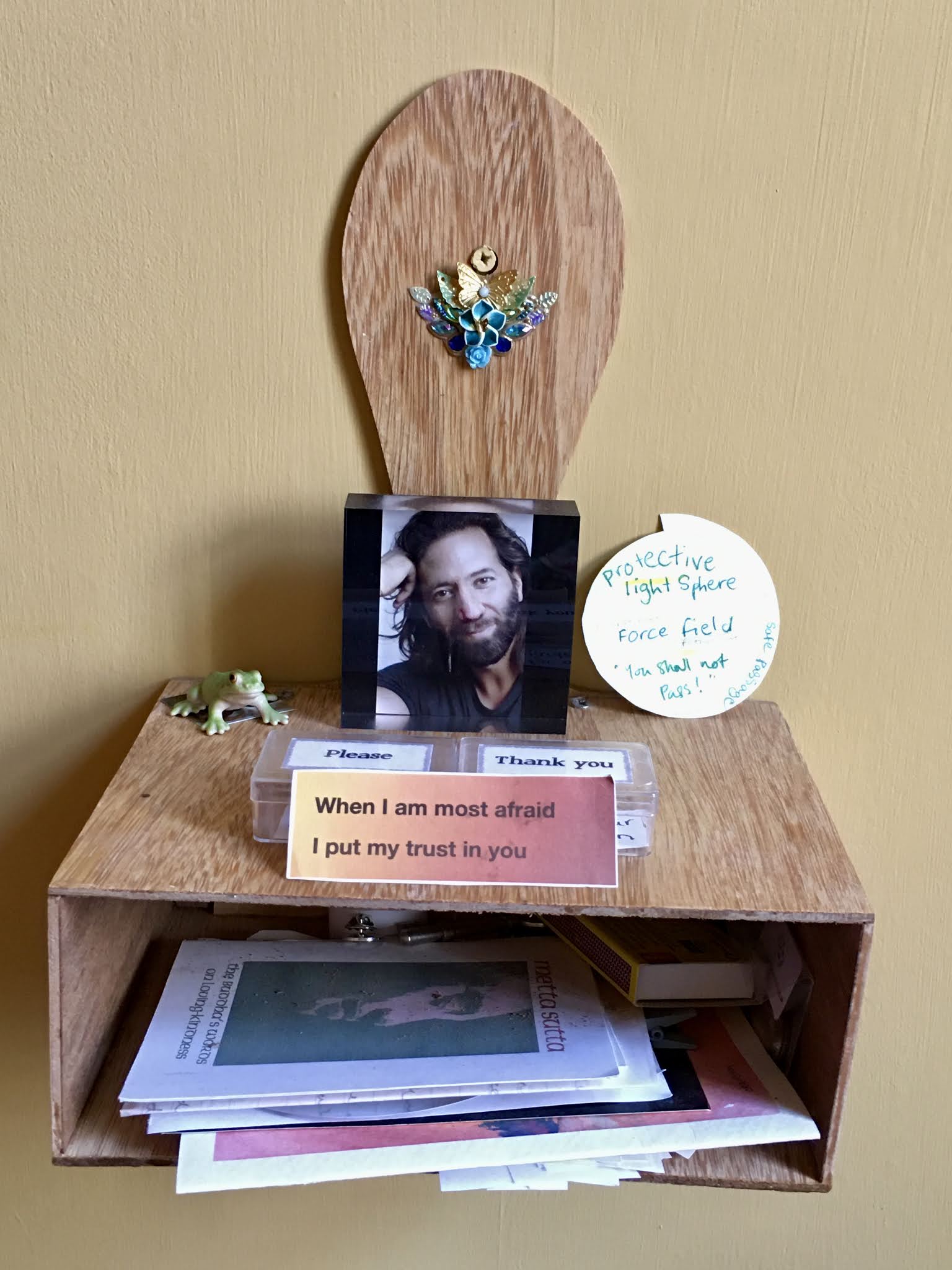
I took the image and had it made into a little photo cube thing for the altar in my bedroom.


I have it on my computer desktop too.


Now, I do know it isn't Jesus. I do understand that it's just a man from the twenty-first century who made a Facebook profile that also isn't actually Jesus. 

I also love this painting by Yongsung Kim, called The Hand of God (you can get it from all sorts of places including Amazon).


What I like best about The Hand of God and the Jesus on my little altar is that they look warm and friendly and kind, not mournful or stern and forbidding and sour and accusatory like so many depictions of Jesus including the Herbert Beechcroft one. They look like a Jesus I could relate to, that gives me hope. And that's why I have the little photo on my altar.

A while ago, in our Facebook church, when I was responsible for leading the meeting one morning, and it was a eucharist,  I added in an image of the Jesus on my altar. Now this time I really was naive because I imagined it would be received and understood as I saw and beheld it — as a representation of Jesus. End of. But no.

There followed a series of people saying, "Isn't that Jonathan Roumie from The Chosen?" (no) or "Who's that? It isn't anyone I know", etc. A number of women posted pictures of similar men. 

I was quite startled (thinking, like a child, "No! No! No! That's Jesus!"), and swapped out the picture for one of bread and wine. 

I have never been into the ogling beautiful poster men thing over which women bond, and I felt embarrassed by the reaction. In the course of the meeting when our sharing of bread and wine was concluded, I posted an image of the empty vessels and alongside them the little Jesus picture — but again it evoked the same reaction (I was surprised; a slow learner) so again I swapped it out.

I guess this is just a mismatch of social currency — which relies on shared assumptions. It made me realise (I don't really know why I didn't see it before) that how we visualise the face of Jesus, whose presence is so strong and clear even though it is invisible, has to remain a very private thing — it's not something one can share; it goes wrong.

I have another little altar in my room, with Our Lady on it. Here she is.


I love it because she is dear and beautiful and Hebe made her for me, and I like to have something honouring Our Lady in my room. Uh-oh — I see the little shelf needs dusting.

But I think, while I will always keep the statue of Our Lady, I might not keep the picture of Jesus, because I feel a bit ashamed of the connotation it has now acquired to do with pin-ups and actors — Jonathan Roumie and Mark Hamil and so forth. Maybe the face of Jesus can only live inside my heart, and that's how it has to stay.

Because these devotional things are very personal, aren't they?